Matthew McFall Matthew McFall

Skene’s Creek

Living Lightly with Landscape’

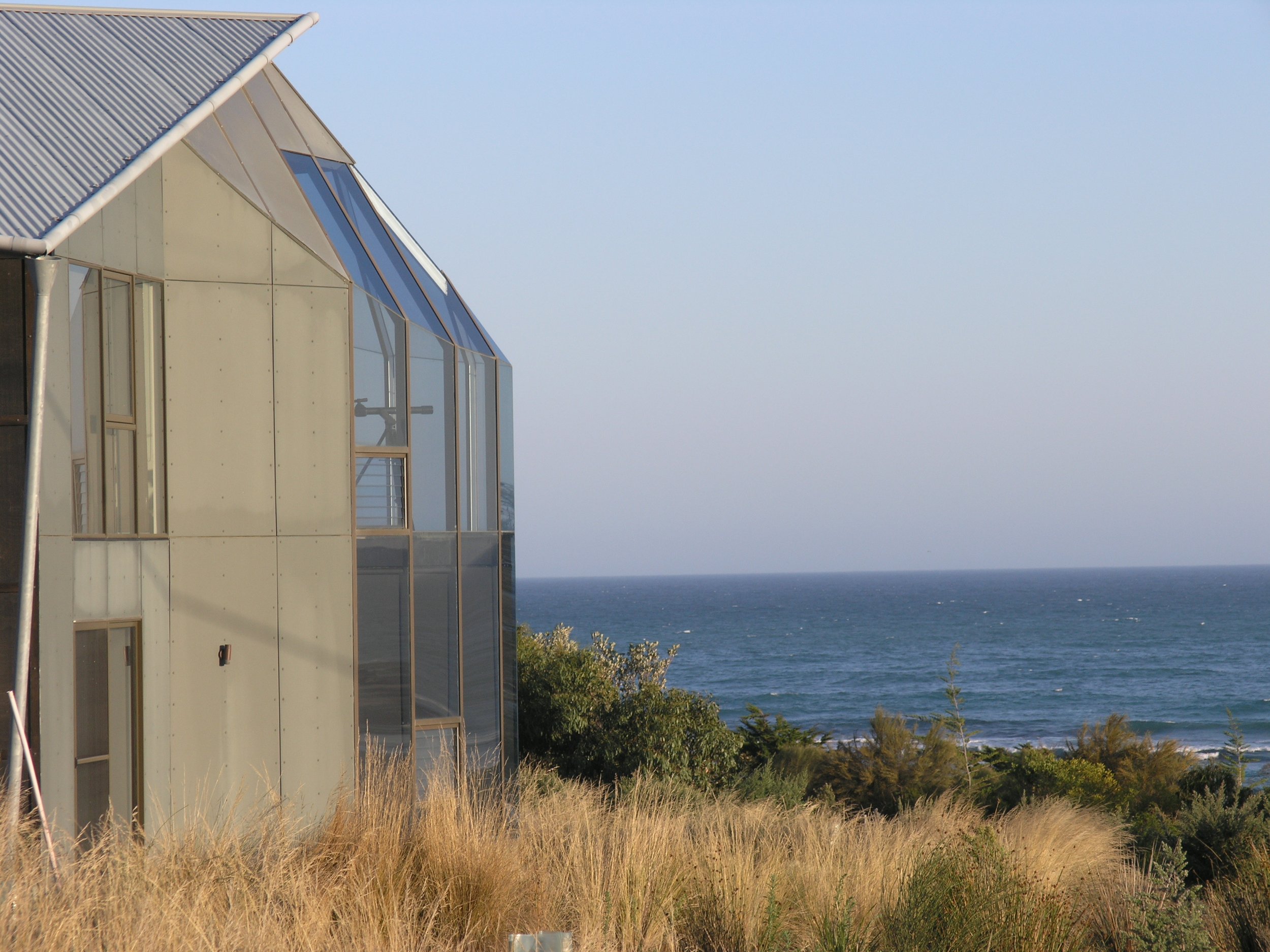
View across revegetated scrub to Bass Strait

December 1999, Skene’s Creek Victoria

Many moons ago, whilst I was sharing an office with the now-departed Carol Frank-Mas, she offered me a project. It was a gift from heaven. Its location was in Skene’s Creek (down the west coast of Victoria) at the foothills of the Great Otway National Park, and was to be a carefully sited housing development on a vacant ex-primary school site. This was one of the few projects where the land is just as important as the housing; siting was critical.

 Immediately, I thought of the renowned project in California The Sea Ranch by Lawrence Halprin. One of the principles of that project was ‘Living lightly on Landscape’

“The original Sea Ranch concept directed that people would join the natural environment with minimal impact…… natural processes were allowed to take their course, with indigenous planting where needed. The Ranch would become a wildlife and game refuge. Improvements would involve a minimum of grading. Utilities would be located underground, and population density kept low. Residential design would allow homes to blend into and become part of the natural landscape.”

Edge of site looking south-west March, 2001

This vision, obviously on a much smaller scale, guided me on my way to developing the concept for Skene’s Creek. The residents interact with and be exposed to the natural environment of Victoria’s southwest coast. The natural geological processes of tectonics and erosion and can be clearly seen, as can the power and changing moods of Bass Strait. The predominant onshore south-westerly winds are in your face and the high rainfall are constant reminders you are on a wild coastline with a mountain range behind it.

 I contacted an architect mate, Steven Last, in Hobart who had similar interests as myself and invited him along for the ride. And what a ride it turned out to be. Project meetings whilst surfing, further meetings in the pub over numerous beers to get the feel for the place, sleeping close to the site in a tiny bungalow with streams of yellow trace for ideas (no laptops in those days). Yep, got to know it alright.

When we finally dragged ourselves away from the region, we thrashed out an initial concept for the site. For the essential site analysis I dusted off my edition of Ian McHarg’s Design with Nature, flipped through its pages, and borrowed what I needed. The site is a rough rectangle of almost equal proportions and slopes relatively steeply to the north. Along the eastern side is a what we called ‘Africa’. This was a herb rich woodland of mostly Eucalyptus obliqua (messmate) that appeared roughly the graphical the shape of ‘Africa’ in plan.

Our site analysis revealed the steepest slopes which were more difficult to build on and the less steep which were less difficult, meaning cheaper to build upon. We tried to avoid building in ‘Africa’, although this wasn’t entirely possible as the project still needed to make a profit. Zones of possible construction were located and the access to them went along the contours to mitigate erosion. Stormwater was to run along open rock swales to give residents an appreciation of a key natural process of the Otways i.e. the high rainfall. All roads were gravel. A row of Cupressus macrocarpa (Monterey Cypress) grew on the property boundary facing the ocean, likely planted as an agricultural windbreak by early farmers , were removed, and the timber was used in the batten fences for the private open space of the units. This clearance had disastrous effects on the Eucalypts behind (more on this later) and ironically Monterey Cypress trees were important species in Halprin’s Sea Ranch Project in California, however the are considered an environmental weed in Victoria.

This was no standard subdivision where you sell the block and have no idea what the buildings will look like. It was a clustered one that specified the building type, creating a consistency in design and saving most of the site in common land.

It was so much fun working the building forms with the landscape design. Steve was into fish so some of the buildings all reflected a fish species in plan and elevation. We had the Stingray’s on first line on the coast with bream further up, and tree houses amongst the periphery of ‘Africa’. The entire site was to be revegetated using indigenous species in a successional order. Roads were kept to a minimum size and car parking is screened. The support infrastructure is hidden underground. The clustered siting ensures that each unit had either uninterrupted or tree framed views back toward the township of Apollo Bay. It was to be known as C-Air.

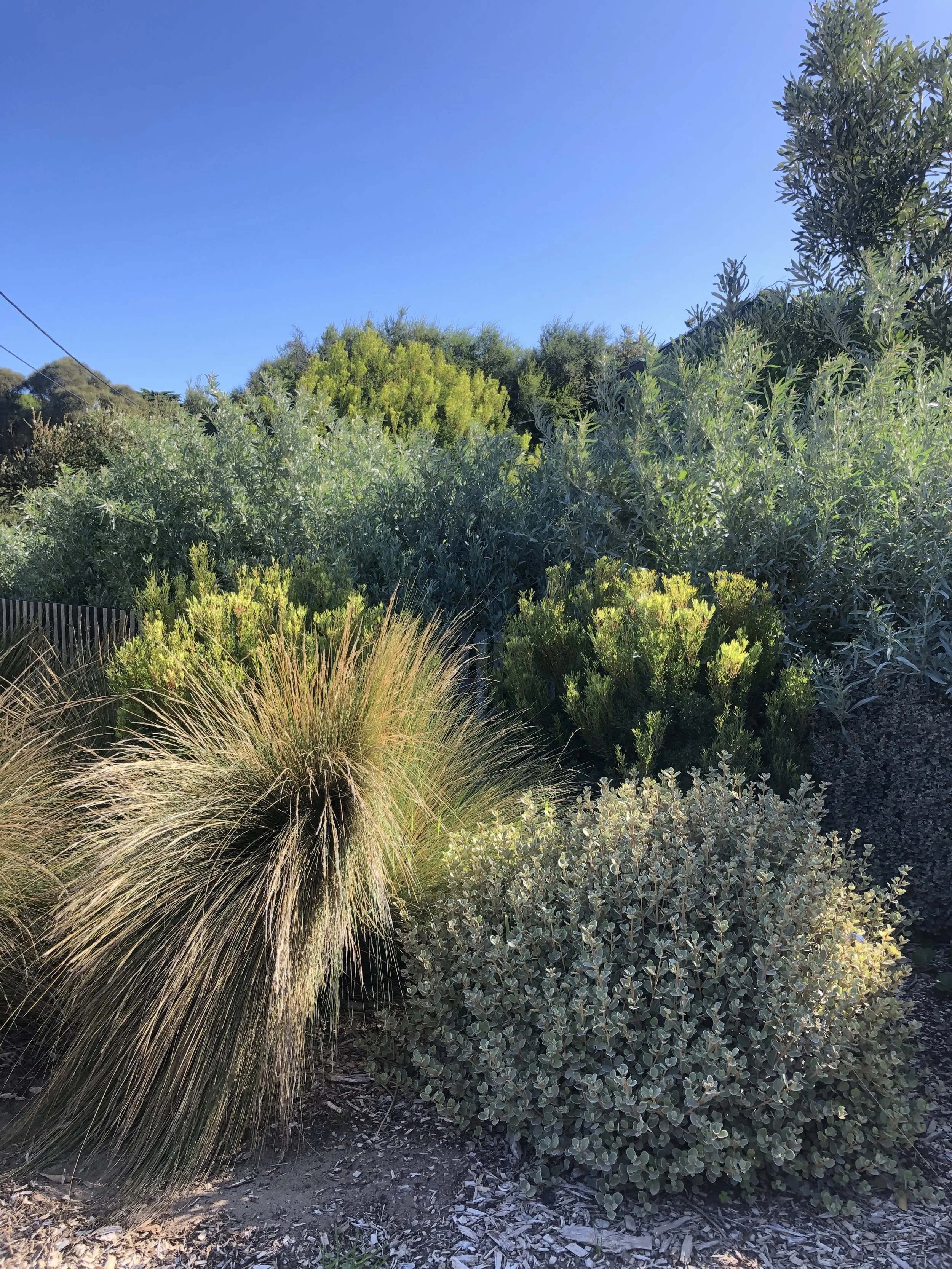
We saw the most important environmental asset of the site to be the indigenous woodland. Although it is a regenerated one (the site appears from early photos of the white settlement of the area to have been cleared), it was by natural processes. Both the tree layer of Manna Gum and Messmate and the understorey are indigenous species. The ecological vegetation classes that existed on the site were: a mix of Shrubby Foothill Forest (EVC 45) to the rear of the site, through the middle flat area existed Damp Sands Herb-rich Woodland (EVC 3), and at the ocean-fronting side, there was some remnant Coastal Headland Scrub (EVC 161). Much of this type of coastal woodland in and around Apollo Bay was cleared and has remained so. It was proposed to revegetate the site using indigenous plants in a successional order. This included coastal grasses and shrub species close to the foreshore to form a low-level ‘scrub’ then slowly raking up the site back into the Messmate woodland.


Full of optimism, we documented the first stage, which consisted of the 3 Sting Ray Type houses, gardens and infrastructure. It was great to see them out of the ground with their beaks jutting out into Bass Strait.

Closer to the end of construction, the client became disillusioned when he went to sell them. They weren’t large buildings and were built with several quirky details, which I felt added to their uniqueness. They were designed as getaway, upmarket, cosy cabins, not sprawling ‘Doncaster dinosaurs’. I thought they were great; the local punter had misgivings about wanting sprawl in coastal towns, getting compact design and paying the same for it.


January 2001, Construction


The client also undertook the site preparation and planting to reduce costs, but the landscape results were initially uneven. The stormwater system required civil engineering to function properly, which was never done, and the project then began to deteriorate through a series of small failures. Once the Cypress trees were removed, the messmates were exposed to the full force of salt-laden winds, which defoliated those closest to the coast, something I should have foreseen.

After a breakdown in communication between Steve and the client, it was all downhill. The first stage eventually matured into a real showcase of landscape and architecture for this rugged coastal setting. Ensuing other stages didn’t follow the designs, and another architect was engaged to build more standard building types, and the southeastern corner was subdivided off. The dream didn’t exactly become a nightmare, more a depressing case of what could have been. With better communication and more belief in the project by the client, it could have been a real example of what can be done on a unique location other than a bog-standard subdivision.


November 2004, Completion and Reflection

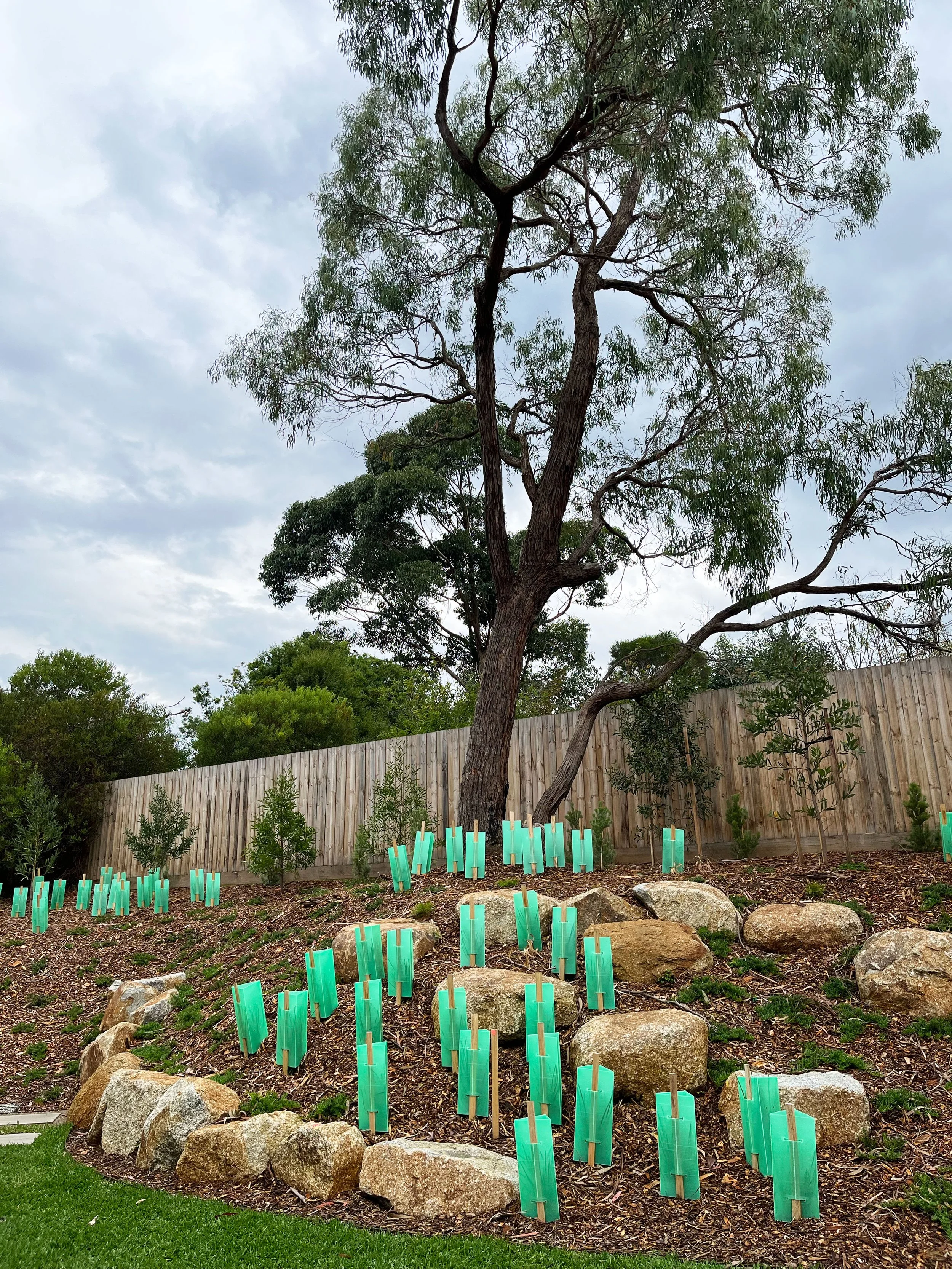
Over time, the landscape matured, and the buildings settled into the site. The original windbreak of Cypress trees that were removed, defoliating the Messmates, was replaced with the specified Allocasuarina verticillata (drooping sheoak). The Sheoak’s have formed new windbreaks that wrap around the original Stingray houses and the plants in the revegetated slope along the Great Ocean Road have filled out into a dense coastal scrub. Finally, now operating as commercially successful Airbnb’s the houses, site and vegetation appear to be living lightly in the landscape.

Aerial image of the site 2008

Aerial image of the site 2026

Read More

Latest Posts