Stage 1-entry- 2001
When we first walked the grounds of St Paul’s campus, the landscape told a story of neglect and indifference. The site was defined by expanses of broken asphalt, compacted gravel, and paddock grass: humanity was missing. There was no sense of arrival; no shade, no plants, no paths, no landscape.
The recently appointed school principal, Chris Stock, was a breath of fresh air, bringing with him a clear and compelling vision for the future. Grounded in the values of Catholic Marianist education, the vision extended beyond buildings to the formation of the whole person, whole school and whole Landscape. It was a match made in heaven; we were a young firm full of ideas and enthusiasm, and he was the man in place to make it happen.
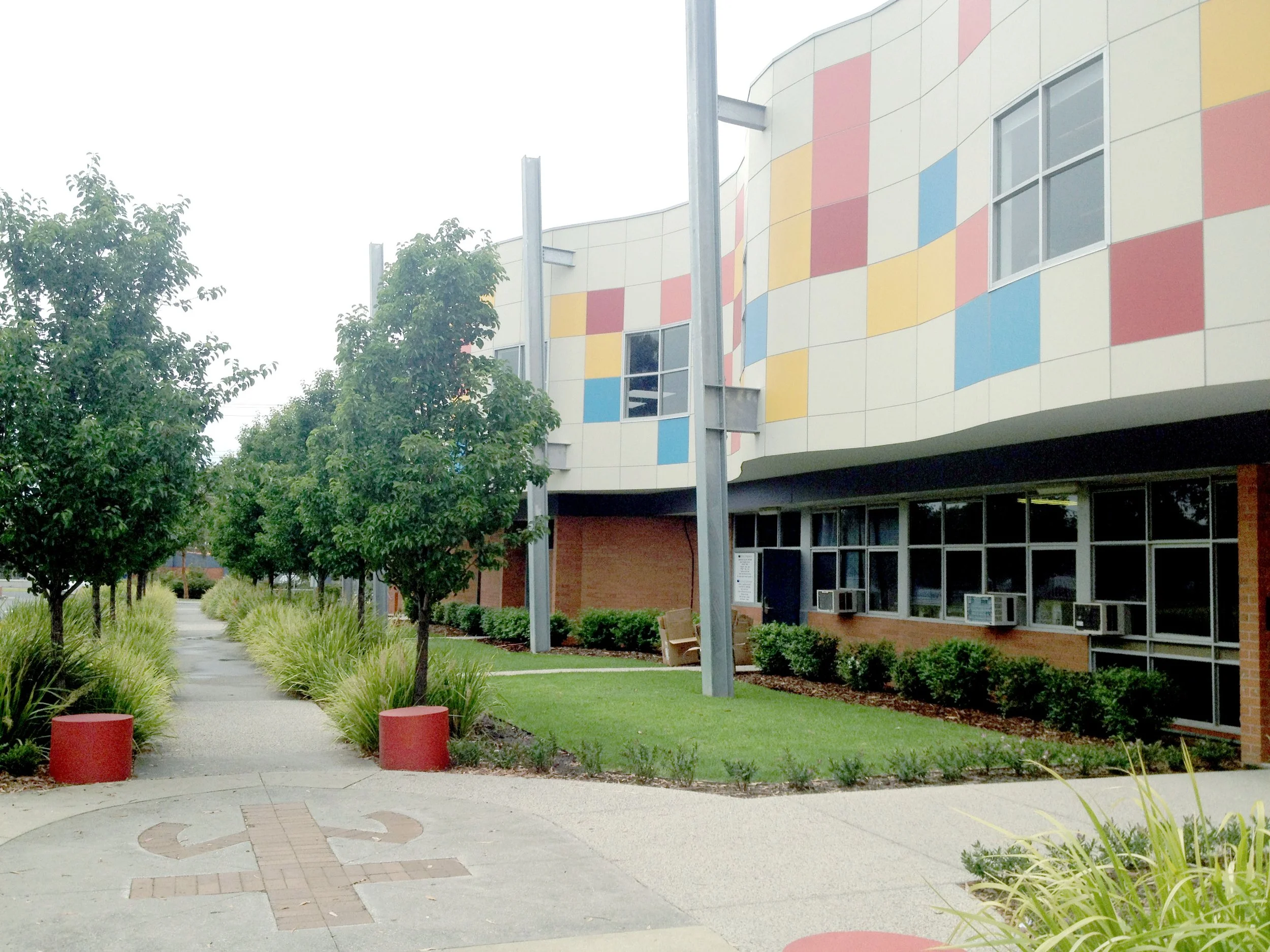
The first project to address was the woeful entry and parking situation. The corraling of parking allowed the school to separate vehicles from pedestrians and move them away from the front of the school pedestrian entry, improving safety while creating the opportunity to create a purposeful entry sequence. The new main pedestrian approach established clarity and order, guiding students and visitors through a structured landscape that signalled a journey to the school front door.
Hard surfaces were rationalised and refined. Edges were clearly defined. Circulation routes were legible. The previous ambiguous frontage became a formalised entry.
Planting played a critical role in this first stage. An avenue was introduced to define the entry corridor and provide long-term shade. Structured planting beds softened the built form and began to establish a campus identity grounded in permanence and care. The former neglected industrial landscape was now one of interest and beauty.
Importantly, Stage 1 was about setting direction. The relocation of parking and redefinition of the entry created the spatial foundation for future stages of development. It marked the beginning of a broader master plan vision for St Paul’s, one that would unfold over subsequent years. This first project signified more than new paving and planting. It represented a cultural shift. The landscape began to reflect the leadership and the values of the school community. The campus was no longer a collection of leftover spaces; it was becoming a coherent educational environment.