
Restoration through Imitation
Habitat restoration through garden design on the Southern Mornington Peninsula. 38°20'59.1"S 144°45'42.9"E
On the southern Mornington Peninsula, much residential development sits adjacent to National Parks, and a great deal of the landscape has been degraded due to early-settlers poor land management practices and successive budget cuts to Parks Victoria. What is the capacity of residential development to provide restoration of habitat?
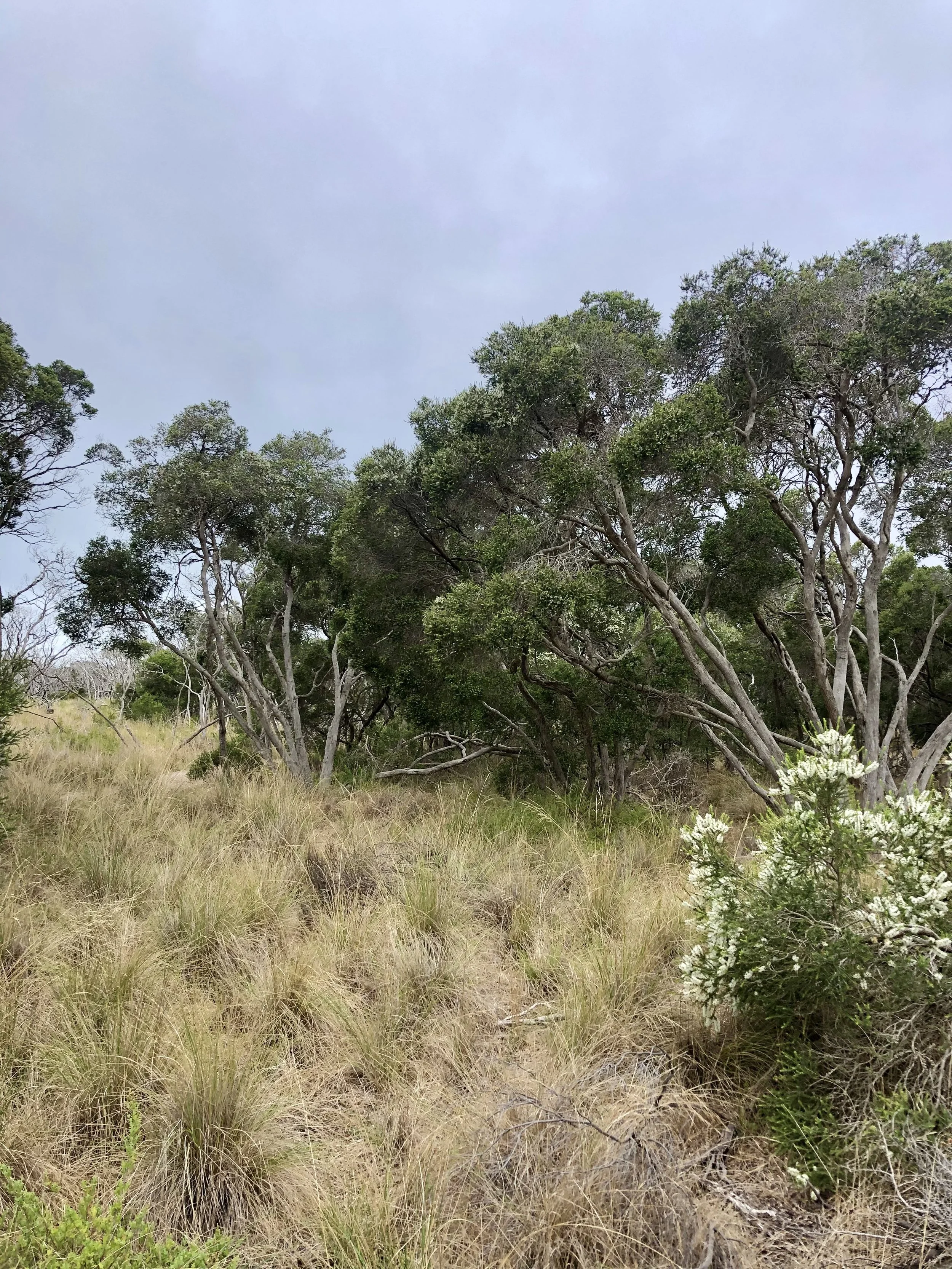
This is important in a Victorian Landscape context because it is the first place of European settlement in Victoria, and much of the landscape has been altered since then. Before European settlement, the land was managed by the Boonwurrung (or Bunurong) people, part of the Kulin nation. Since the first European settlement in the early 1800s and the cessation of First Nations peoples’ intervention and land management practices, the landscape has been altered through land clearing, grazing, and tree lopping. The result has led to a proliferation of weed species, domination of Tea Tree thickets, and removal of seed stock from key foundation tree species.
How can landscape architecture in a residential garden design context improve and restore habitat by imitating the aesthetic and functional role key plant species play?
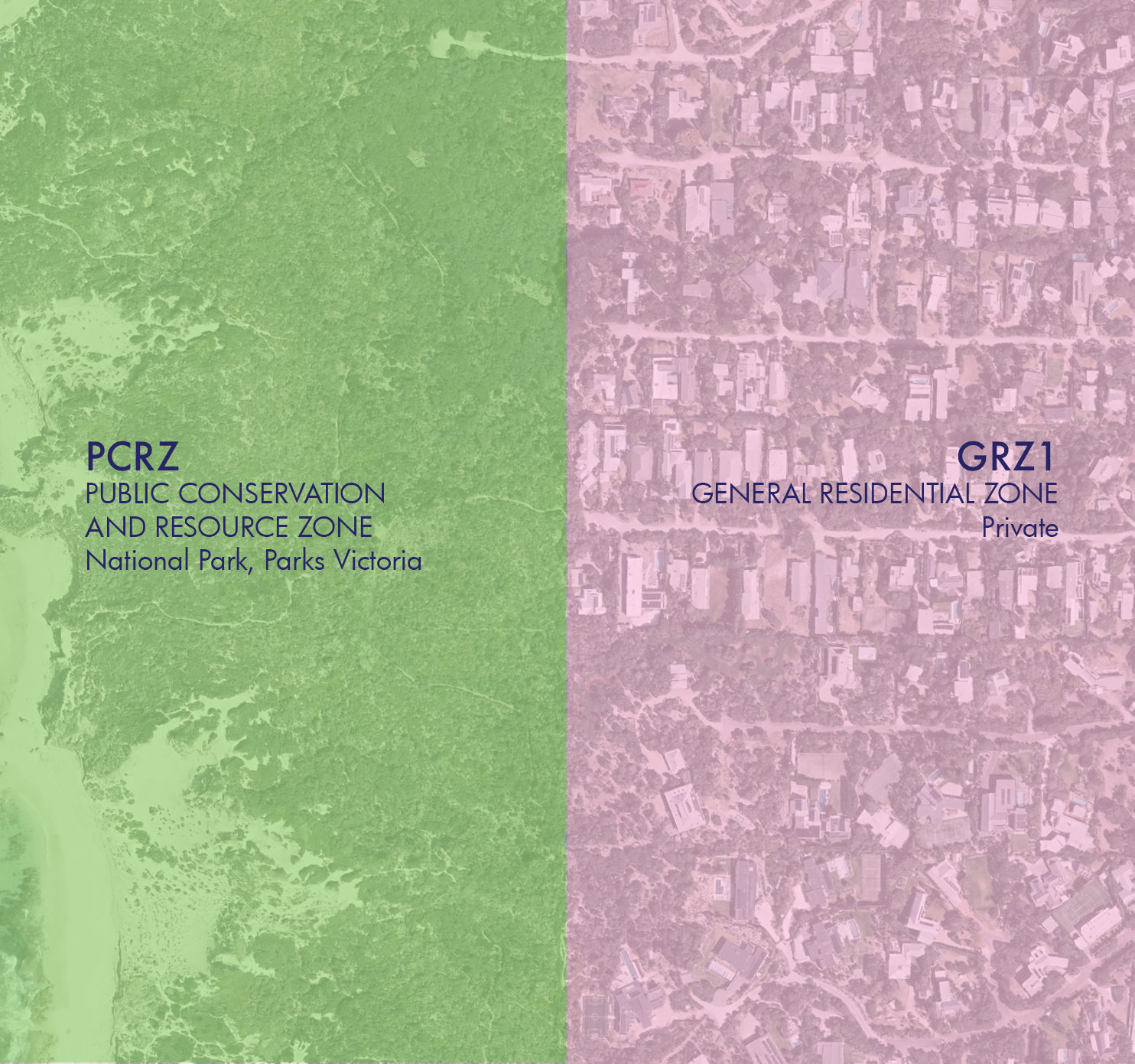
Planning overlays separating private and publicly managed land
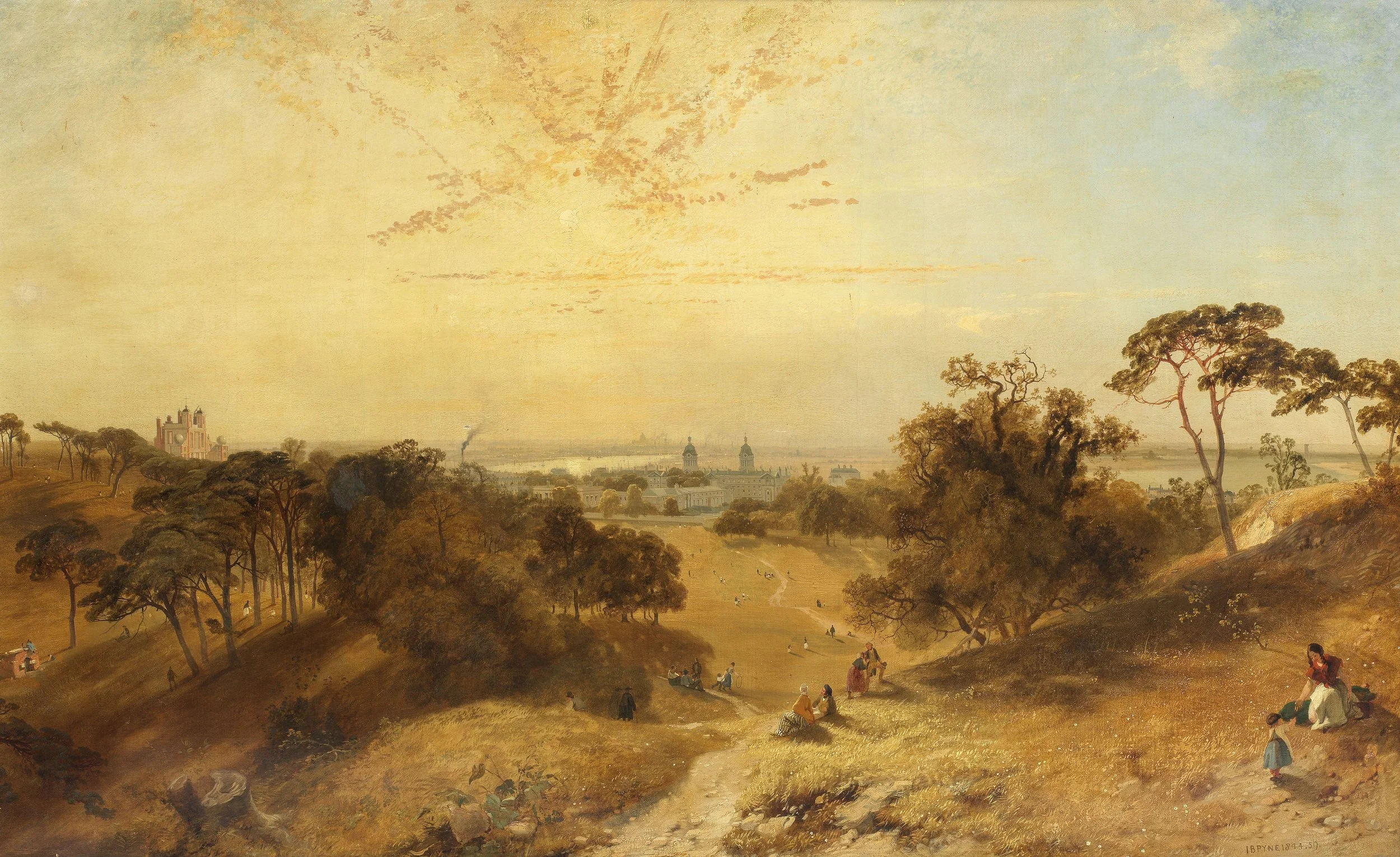
Early historical written accounts by British naturalists and explorers described the landscape as being similar to the naturalistic parks and picturesque estates of England. The Scottish explorer John Murray, who accompanied Lieutenant James Grant aboard the HMS Lady Nelson, described the landscape as comprising Honeysuckle (Banksia integrifolia) and Drooping Sheoak (Allocasuarina verticillata) spaced a considerable distance apart, open grassland with the ground recently burnt, and gently undulating grassy dunes supporting stout trees. Compared to the vegetation primarily found today, which is largely dense scrub, these early accounts provide a very different picture.
“In some places falls nothing short, in beauty and appearance, of Greenwich Park”
J Murray, Lee, I. (1915) The logbooks of the Lady Nelson with the journal of her first commander Lieutenant James Grant R.N. (Transcribed by Ida Lee, F.R.G.S. (Mrs. Charles Bruce Marriott) 2004, ebook). (Grafton & Co. London)
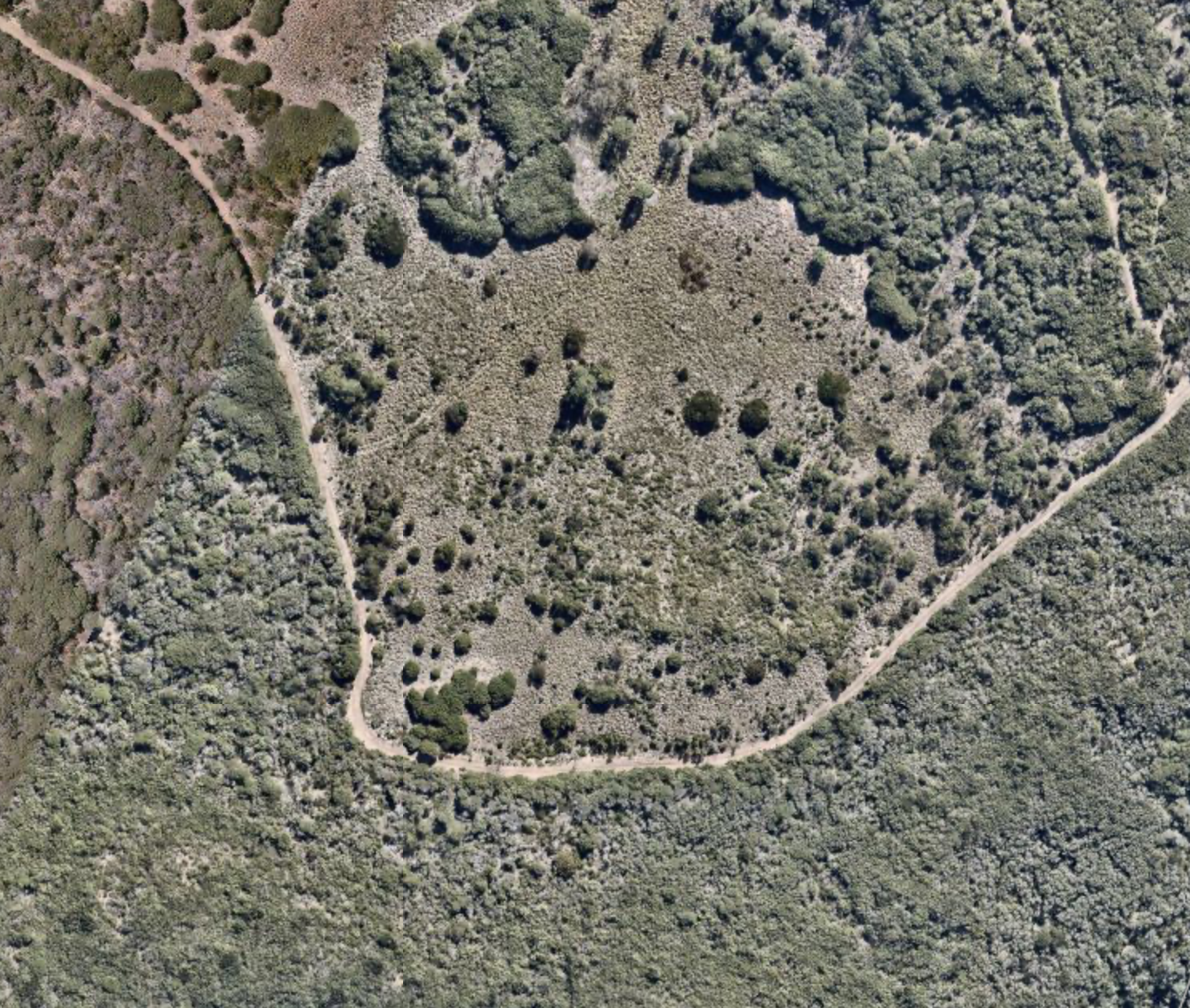
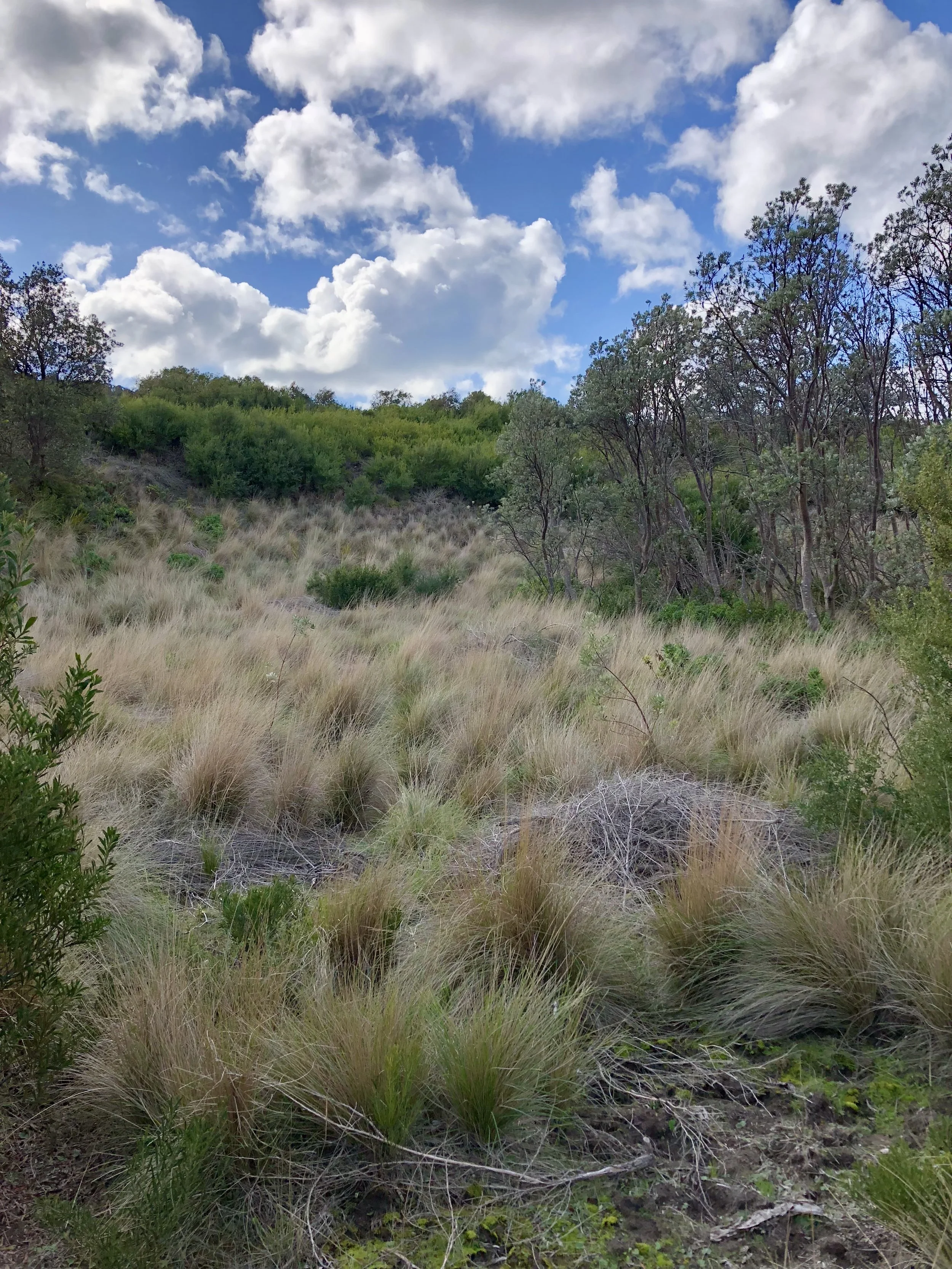
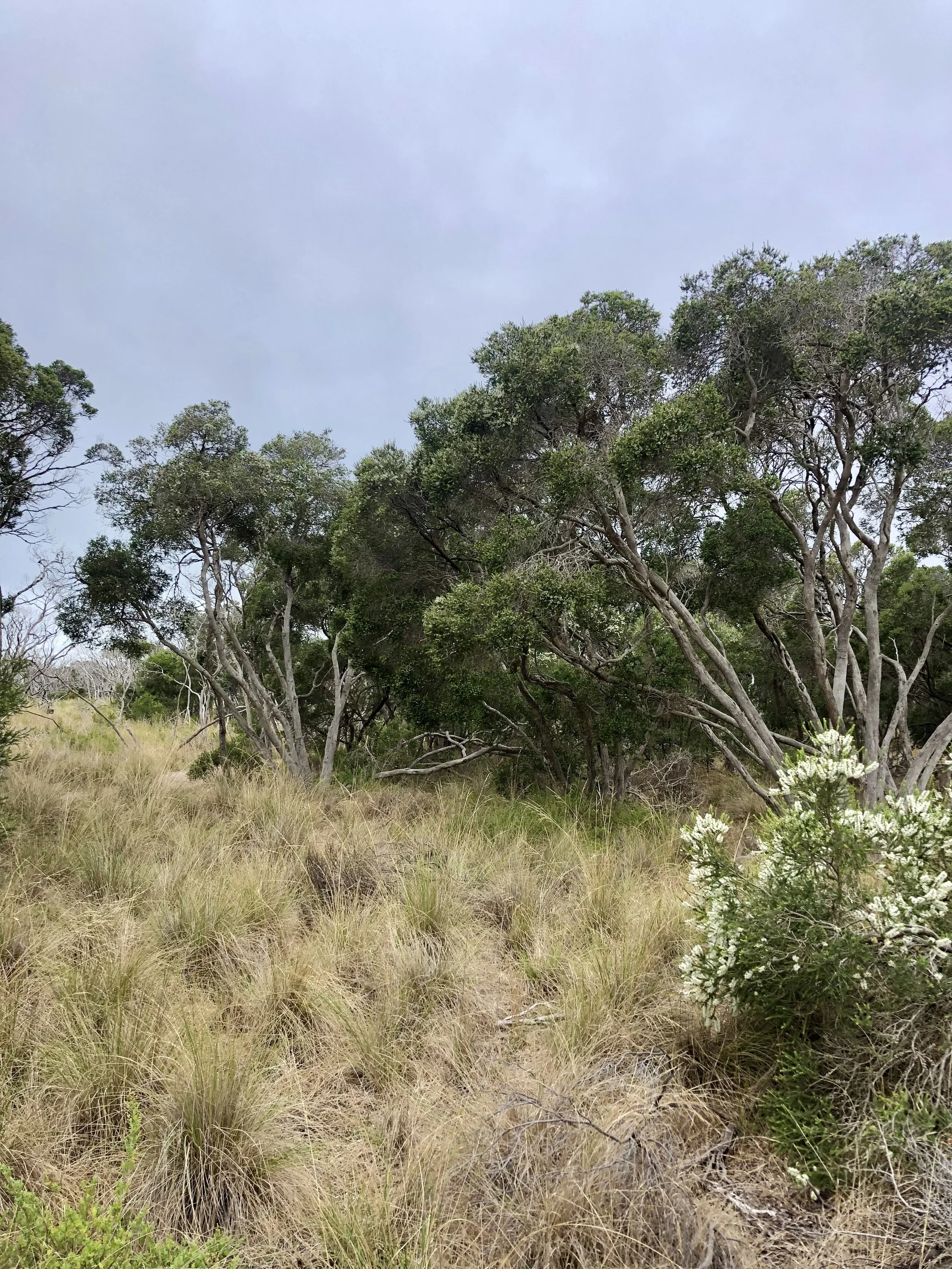
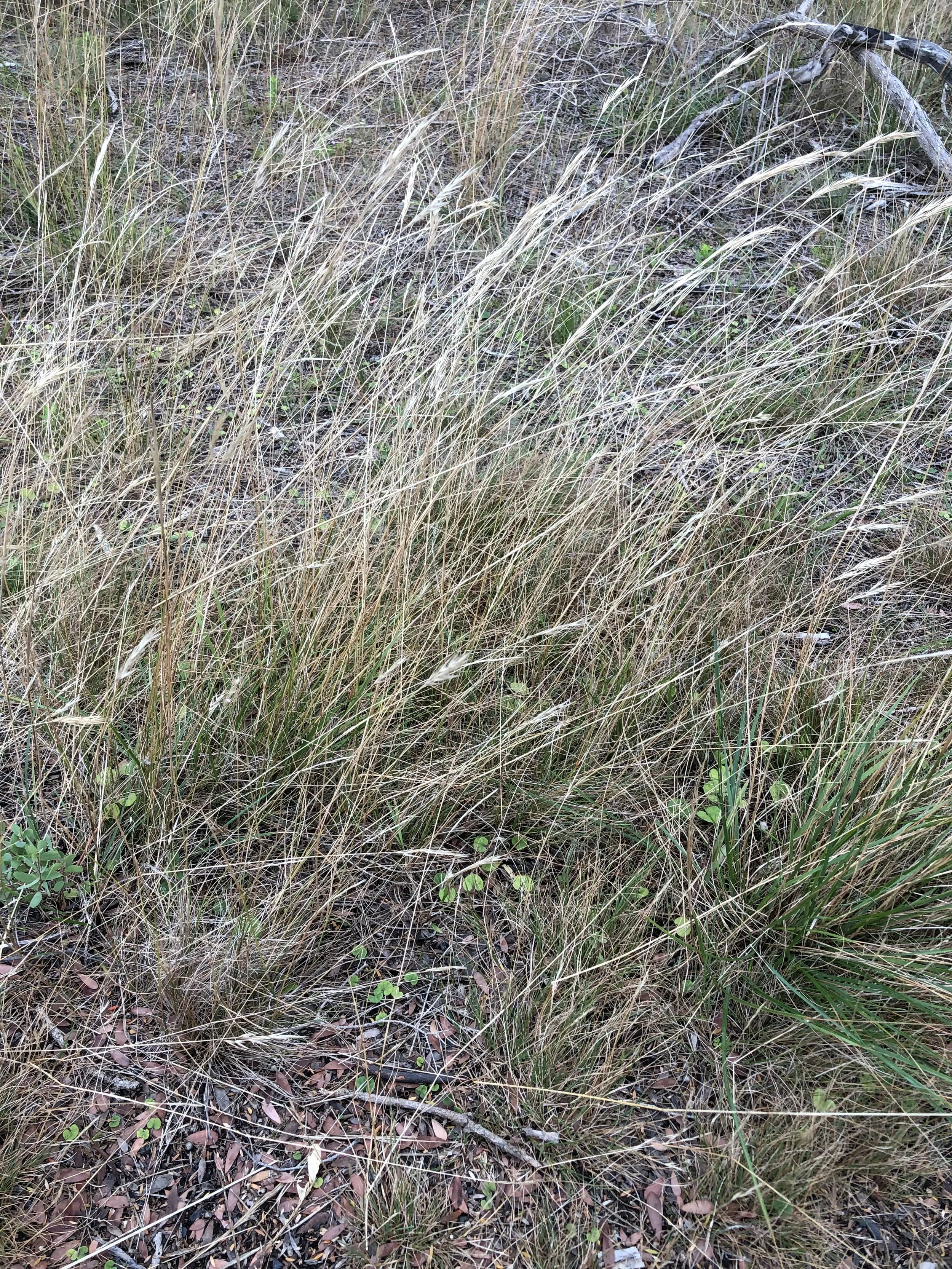
Following settlement in the 1830s, extensive clearing for agriculture and grazing began to fragment these vegetation communities. During the 1840s, large numbers of Sheoak (Allocasuarina verticillata) were felled to supply timber for the local lime kilns, followed by widespread harvesting throughout the 1850s to meet Melbourne’s growing demand for firewood, particularly for domestic heating and commercial bakeries. These activities selectively removed many of the dominant canopy species while disturbing soils and significantly reducing the natural seed source required for woodland regeneration.
At the same time, Indigenous cool burning and rare low-intensity fires ceased and were replaced by European intensive burning practices associated with land clearing and pasture management, combined with grazing by livestock and later rabbits, who are known to feed on sheoak seedlings.
The cumulative effect has been a transition from open woodland and forest to dense coastal scrub, now dominated by Coast tea tree (Gaudium laevigatum) and introduced South African weed species Myrtle-leaf milkwort (Polygala myrtifolia). Both vigorous colonising species, they readily established across disturbed sites where former canopy trees had been removed, creating extensive scrub that now characterises much of the Peninsula. In contrast, indigenous canopy species such as Drooping Sheoak, Coast Banksia (Banksia integrifolia) and Moonah (Melaleuca lanceolata) regenerate more slowly and are less able to recolonise heavily disturbed landscapes without active management.
More recently, reductions in funding for public land management over the past 10–15 years have further limited ecological restoration and weed control. This has accelerated vegetation thickening in some areas, reinforcing the transition from historically open grassed dune woodland to dense scrub.
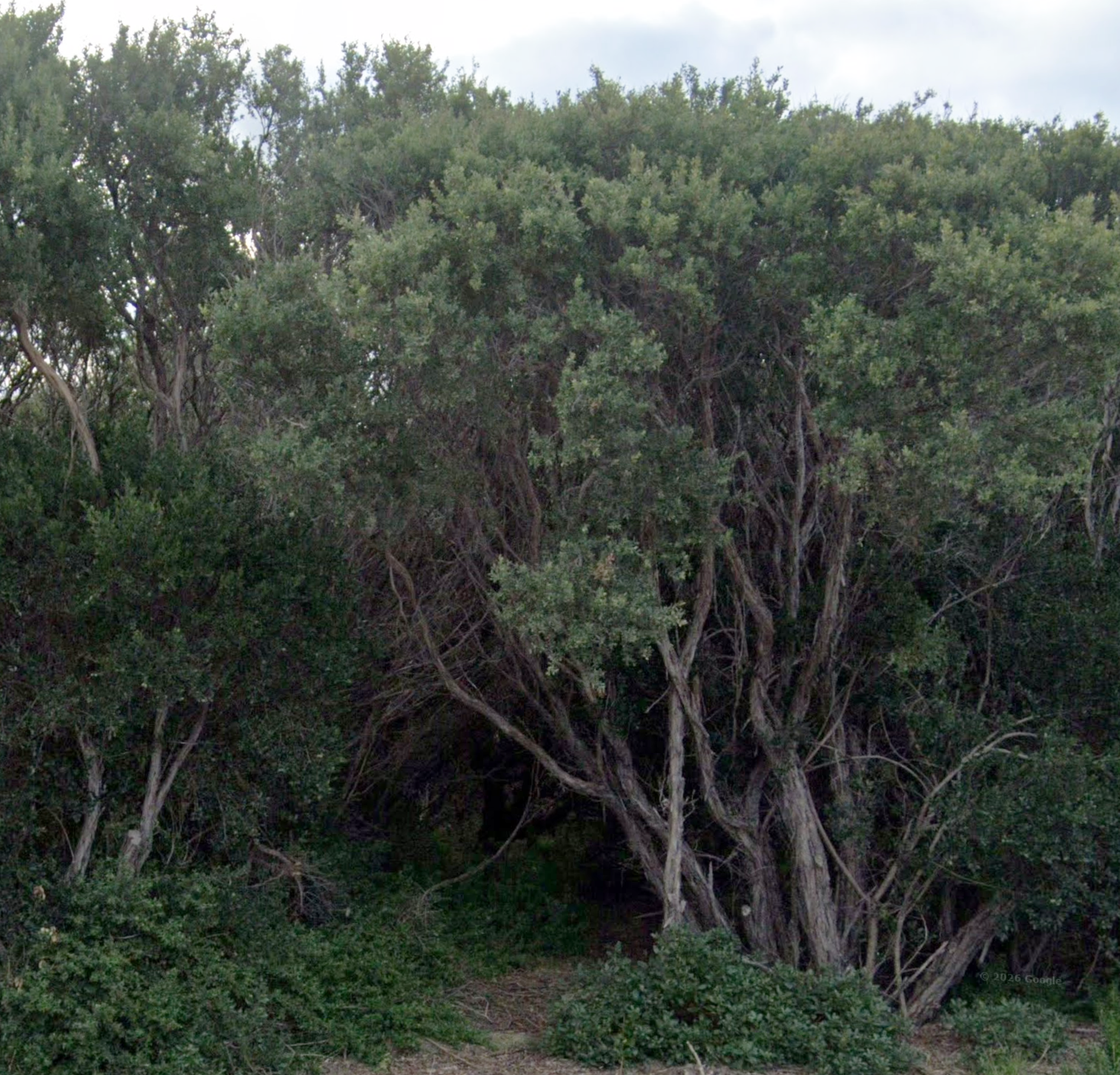
A dense Coast tea tree (Gaudium laevigatum) thicket
Restoration
Private gardens can play an important role in restoring threatened and locally diminished plant species. Reintroducing indigenous plants helps rebuild ecosystem function, create habitat for wildlife and restore resilience to landscapes altered by past land management. To first understand the landscape you’re trying to restore, a good place to start is Mornington Shire Council’s Biodiversity maps online. Here you can find out information about the local Ecological Vegetation Class (EVC) for your property, vegetation structure and plants that existed pre-settlement.
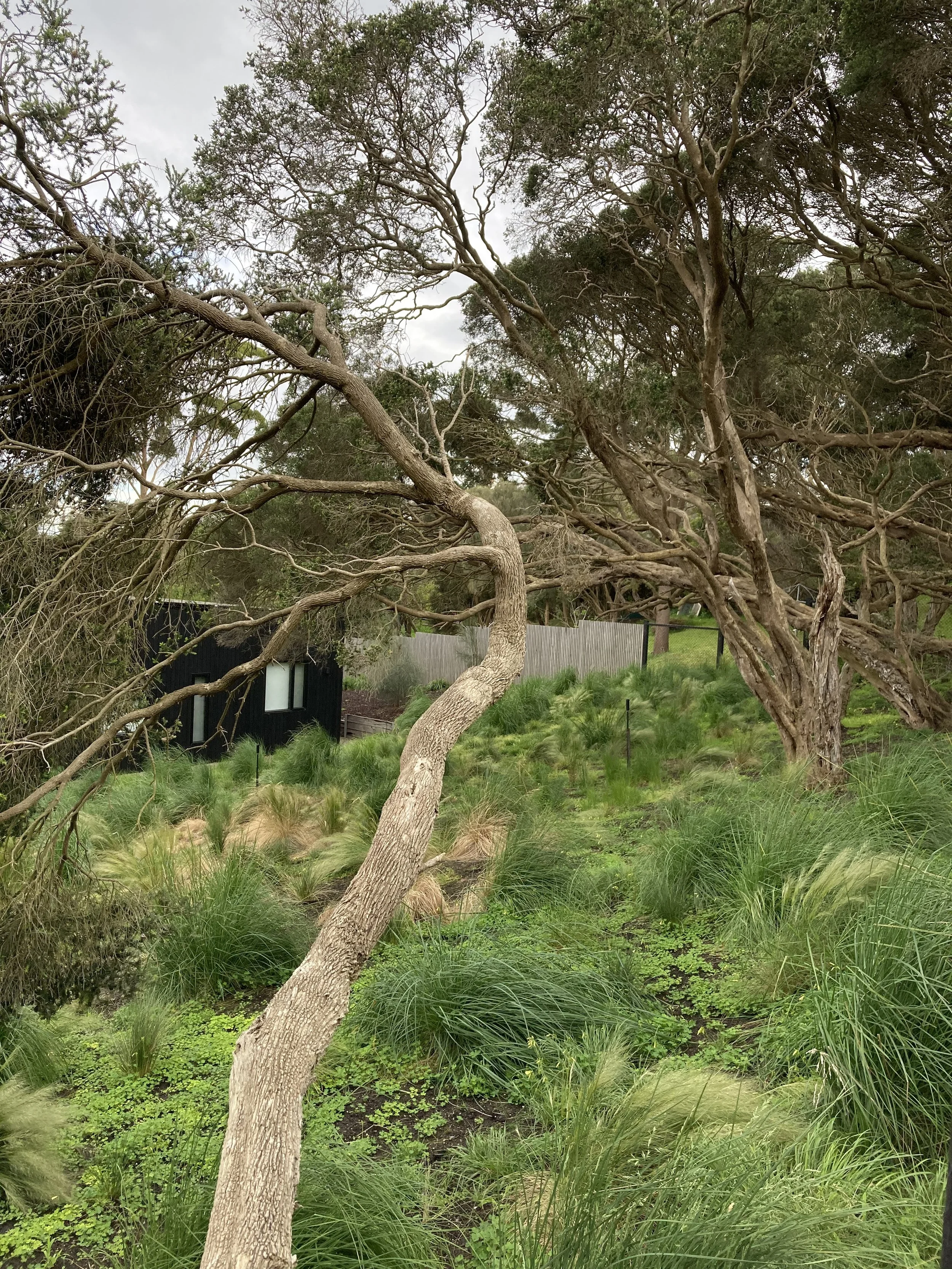
Restoration can be achieved by re-establishing foundation tree species such as Coast Banksia, Moonah and Drooping Sheoak, planting fast-growing fire-retardant groundcovers to suppress weeds and retain soil moisture, and grouping trees and shrubs to encourage habitat formation and cross-pollination. The spaces between these planting groups can then be filled with indigenous grasses and groundcovers, creating a landscape that reflects the structure and function of the Peninsula’s original vegetation.
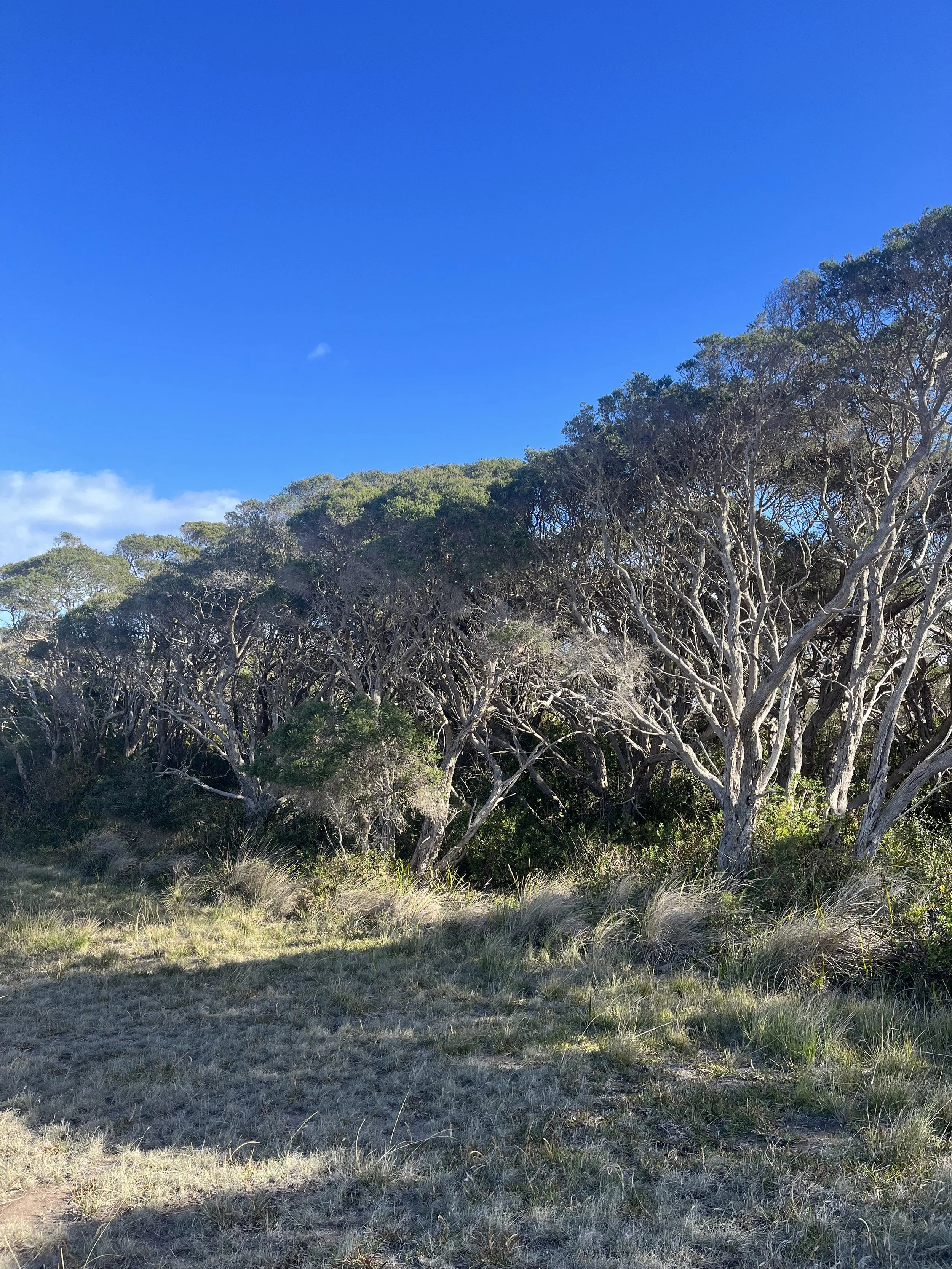
Restoring foundation species is one of the most effective ways private gardens can contribute to the ecological recovery of the Nepean Peninsula. Species such as Coast Banksia (Banksia integrifolia), Moonah (Melaleuca lanceolata) and Drooping Sheoak (Allocasuarina verticillata) once formed the structural framework of the Peninsula’s grassed dune mosaic. Similar to the structural foundation of a building, these trees create and maintain the habitat for species such as the Southern Brown Bandicoot, Short-beaked Echidna and Yellow-tailed Black Cockatoo. Their canopies buffer harsh, salt-laden coastal winds, creating sheltered conditions that allow more delicate understorey species to establish. Their flowers, cones and seeds provide an important food source for birds, insects and small mammals, while the gradual accumulation of leaf litter suppresses weeds through allelopathy.
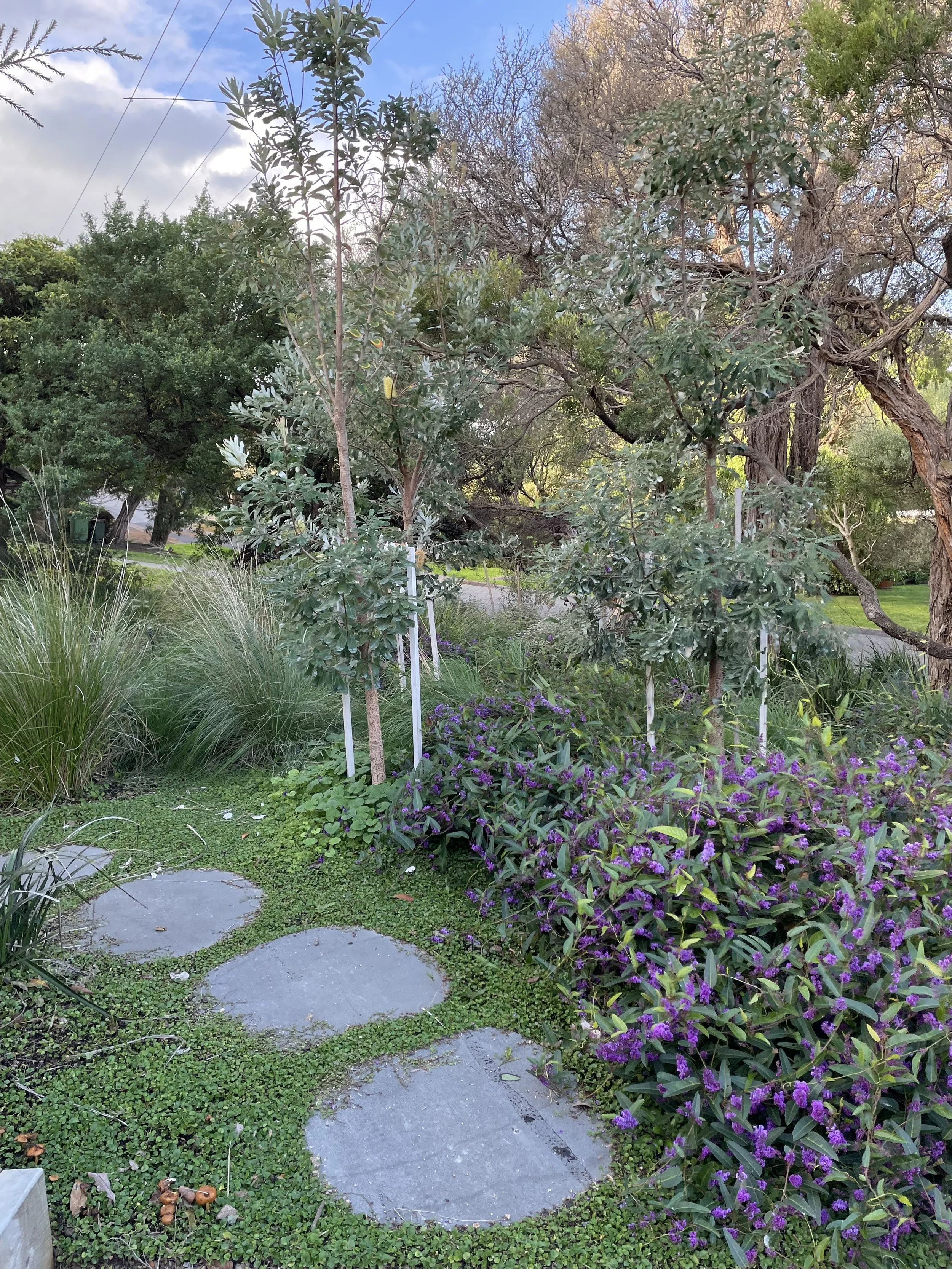
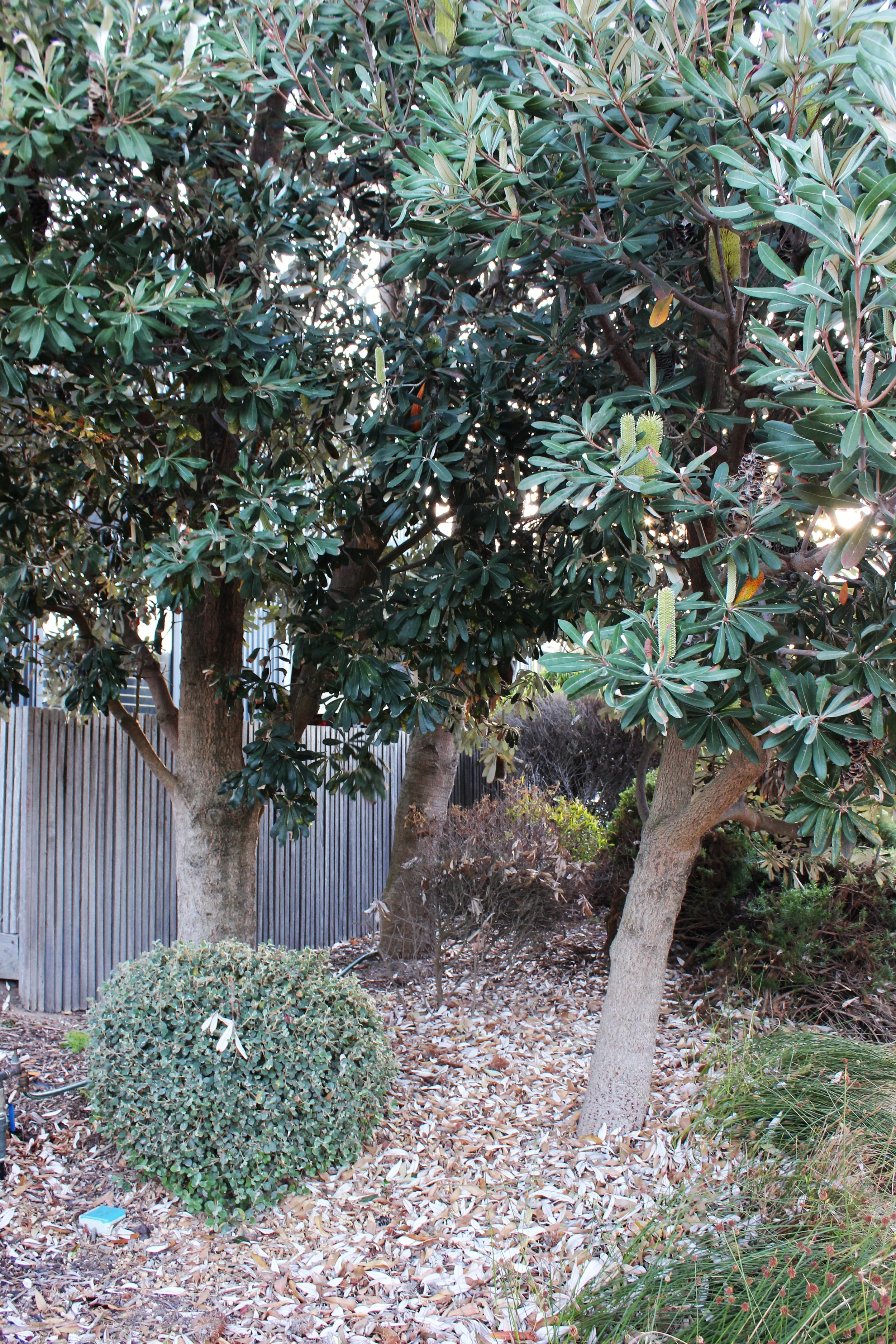
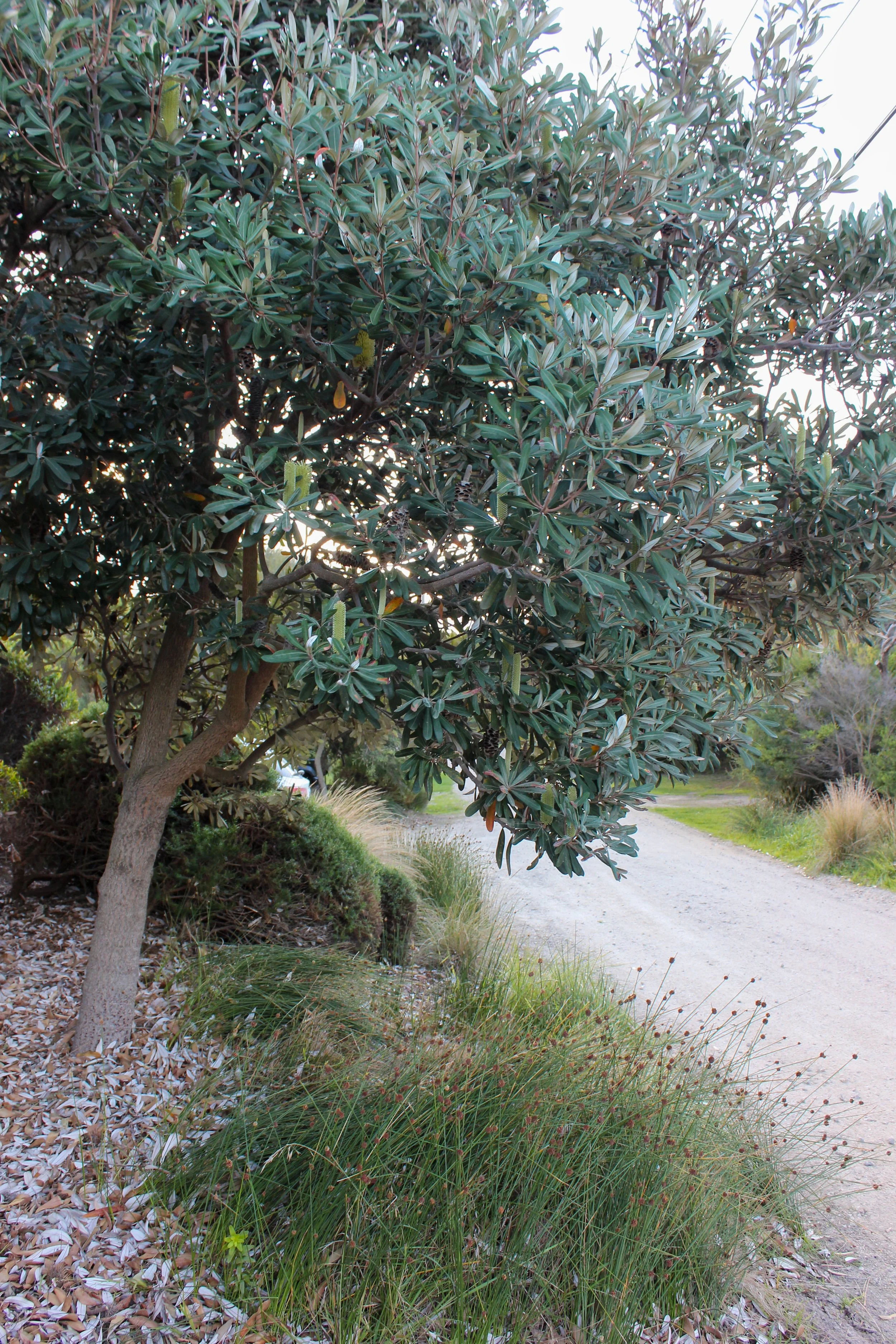
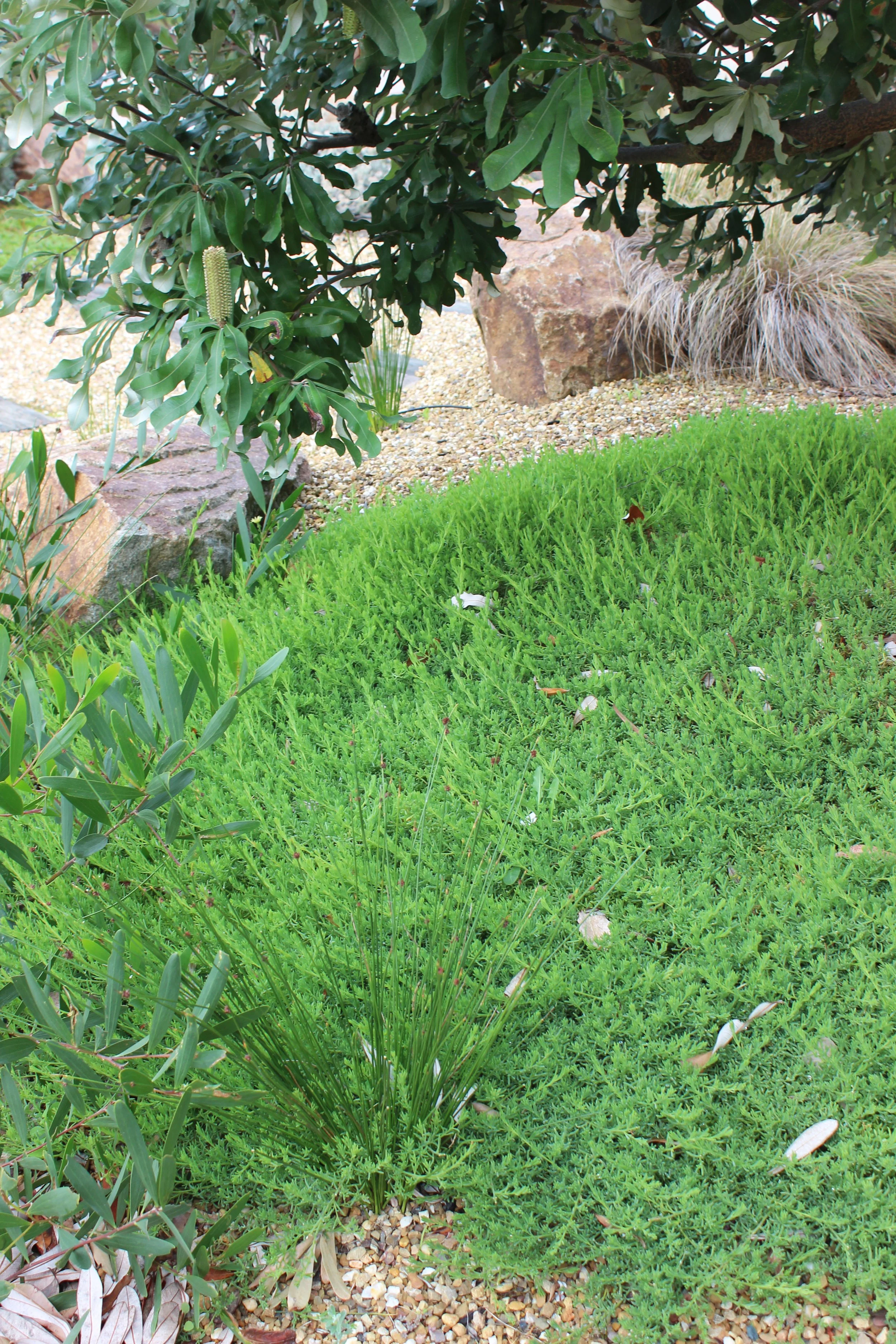
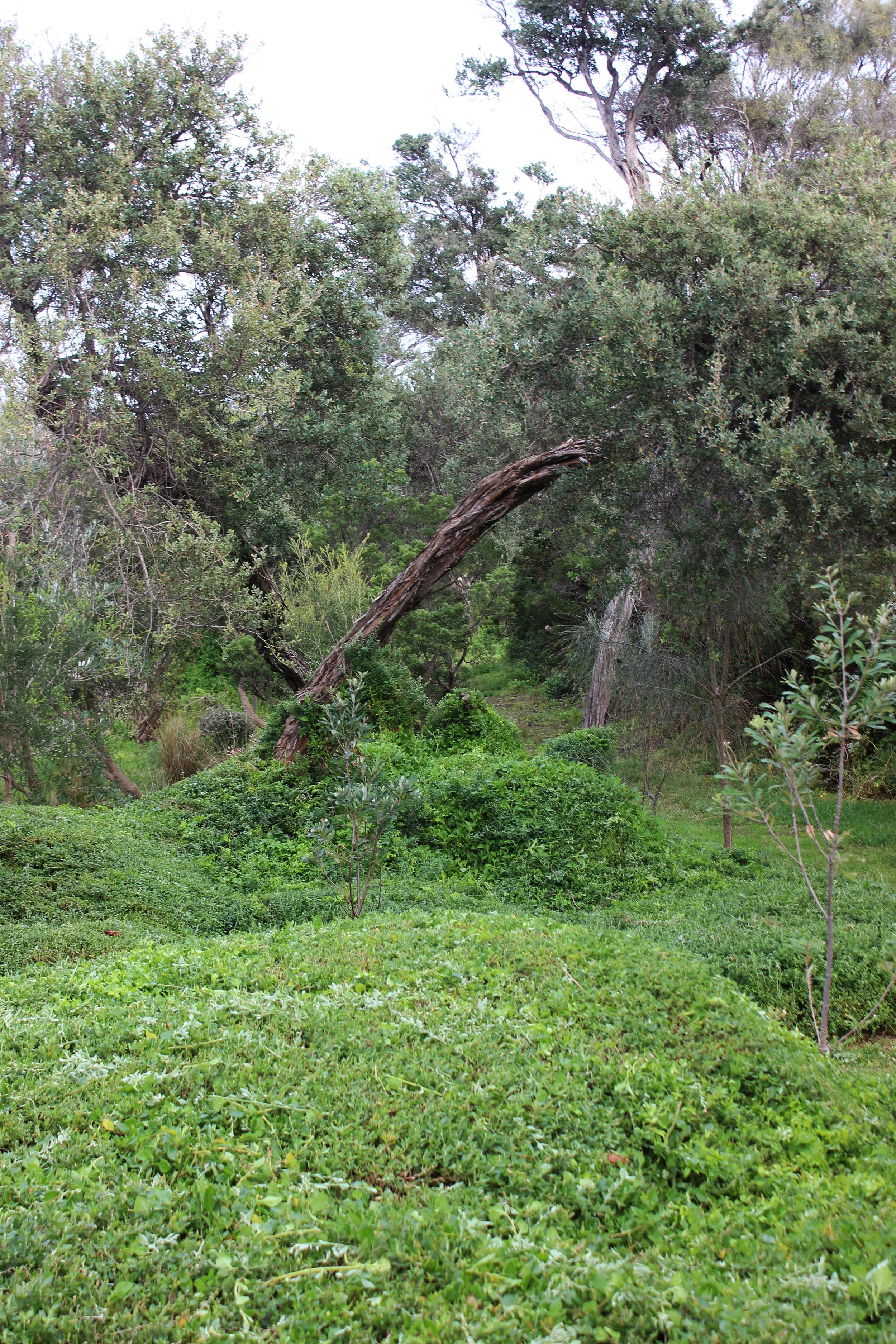
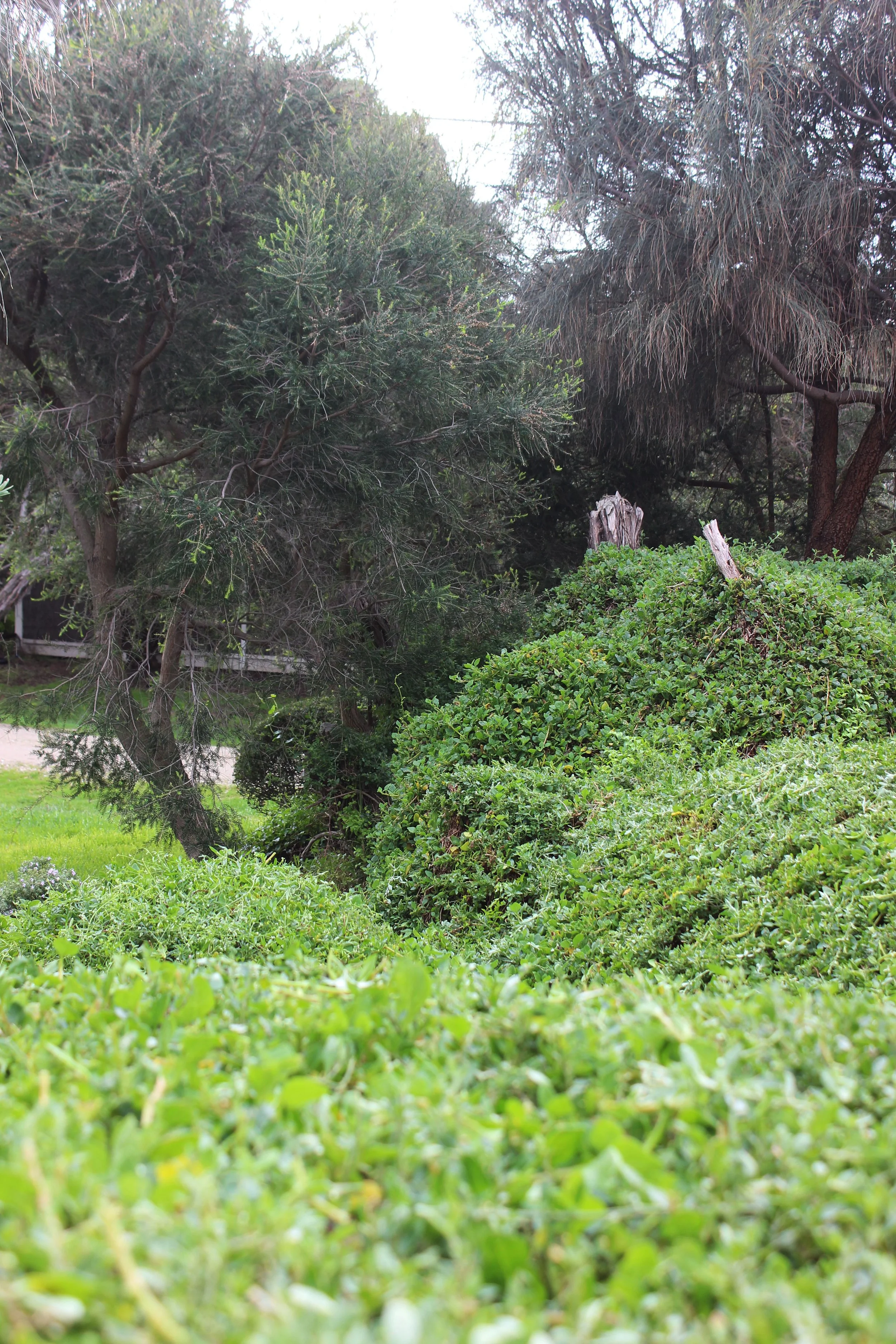
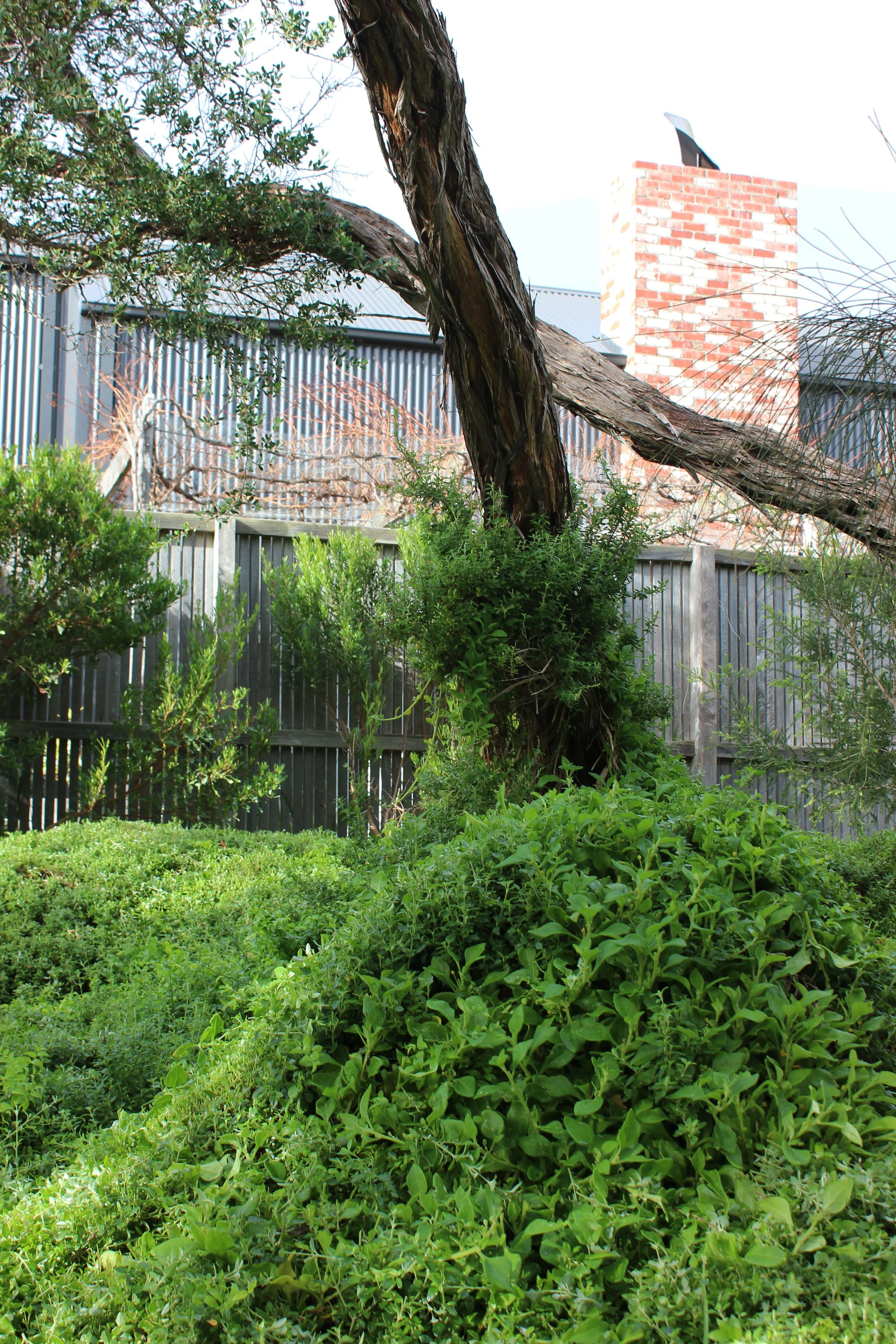
Fast-growing indigenous groundcovers play an important supporting role in establishing canopy trees, particularly Coast Banksia (Coast Banksia Woodland EVC 002), where soils have been disturbed. Semi-succulent species such as Seaberry Saltbush (Rhagodia candolleana subsp. candolleana), Bower Spinach (Tetragonia implexicoma), Karkalla (Carpobrotus rossii) and Rounded Noon-flower (Disphyma crassifolium) quickly cover exposed soils, suppress weed growth and create a living mulch that helps retain soil moisture and moderate soil temperatures. These species increase the rate of establishment of young trees while reducing competition for water and nutrients. Many of these species have fire-retardant characteristics of thick and fleshy leaves, high moisture levels and high salt content. By stabilising the exposed soil and creating favourable conditions for tree establishment, these groundcovers help accelerate the restoration of foundation species.
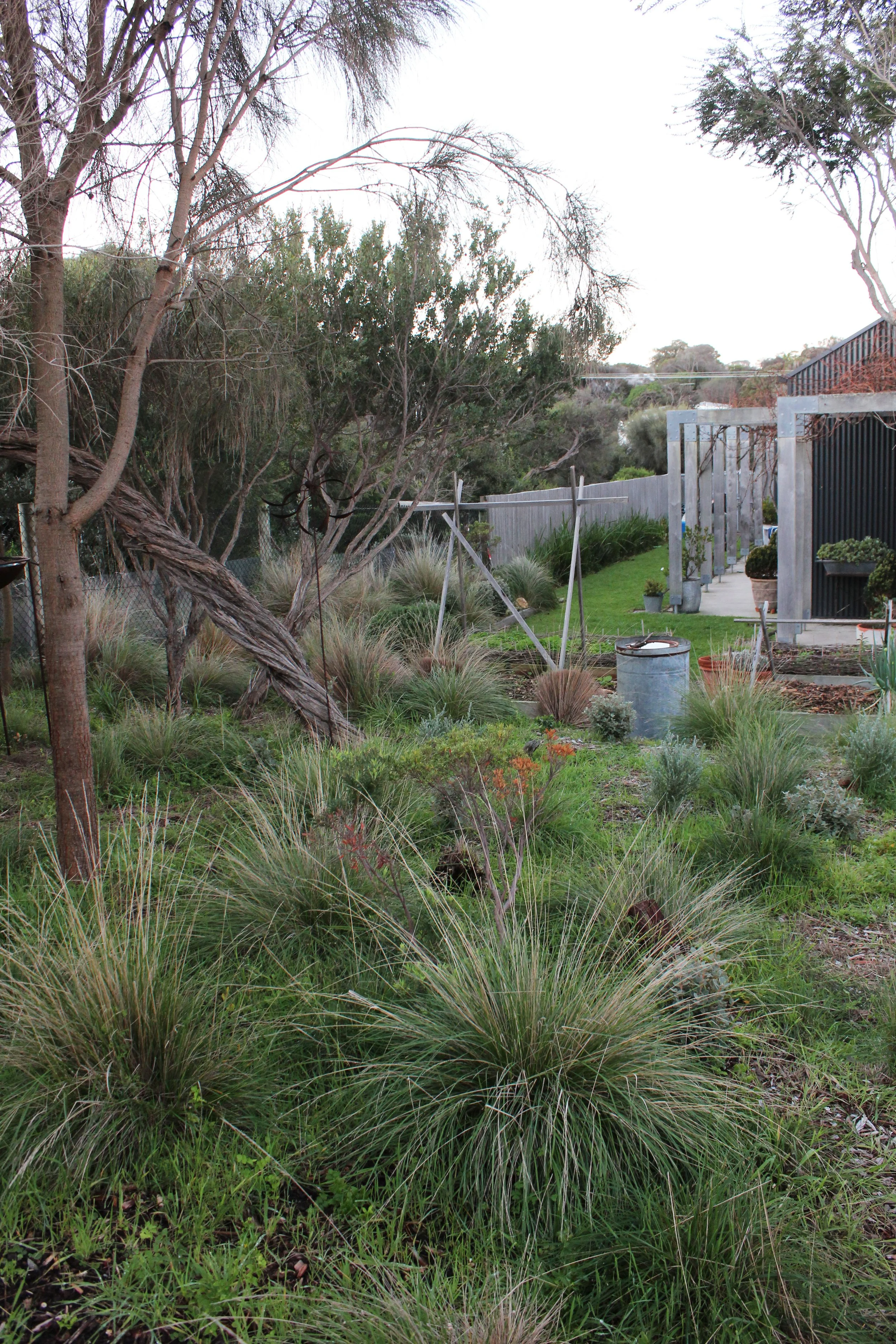
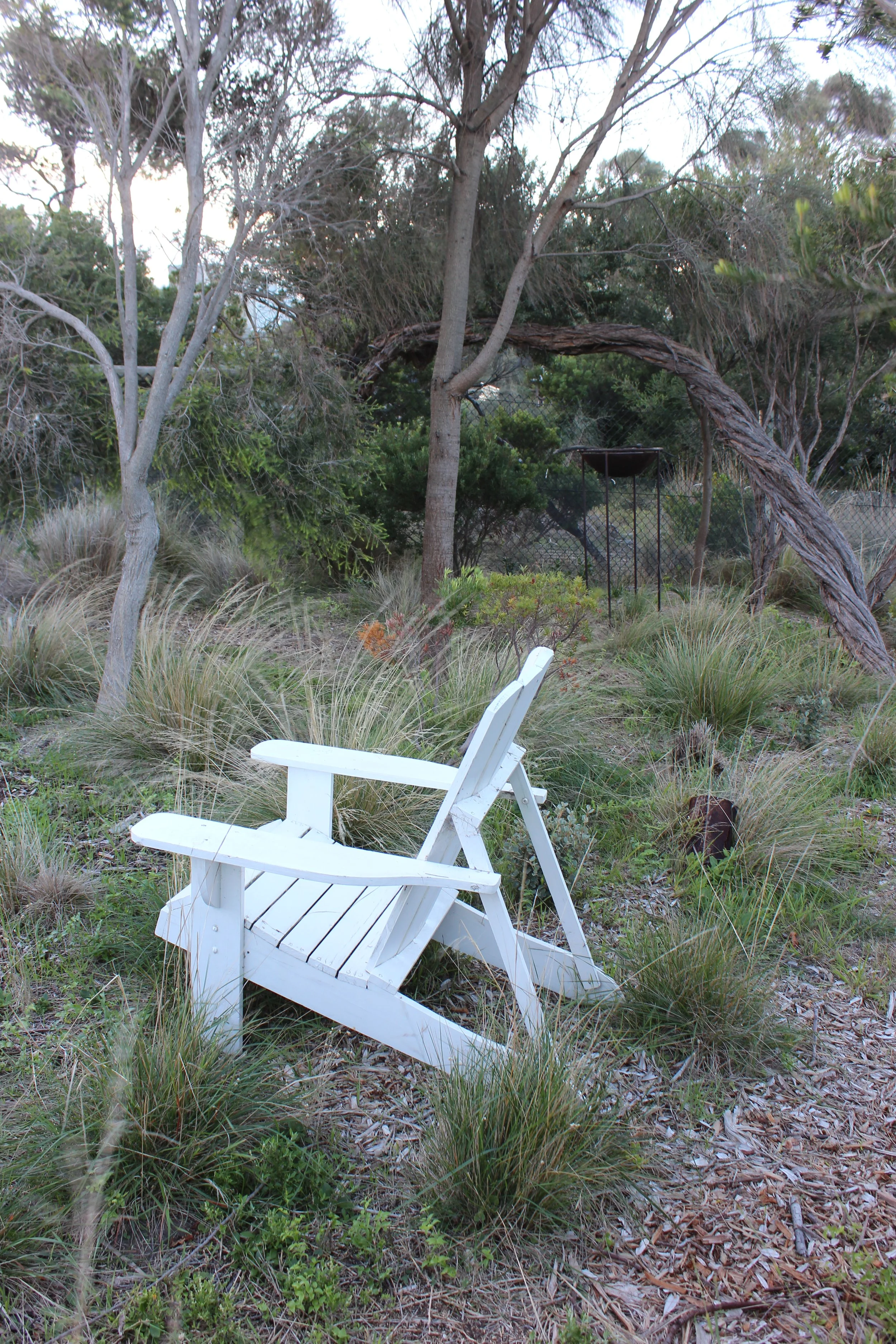
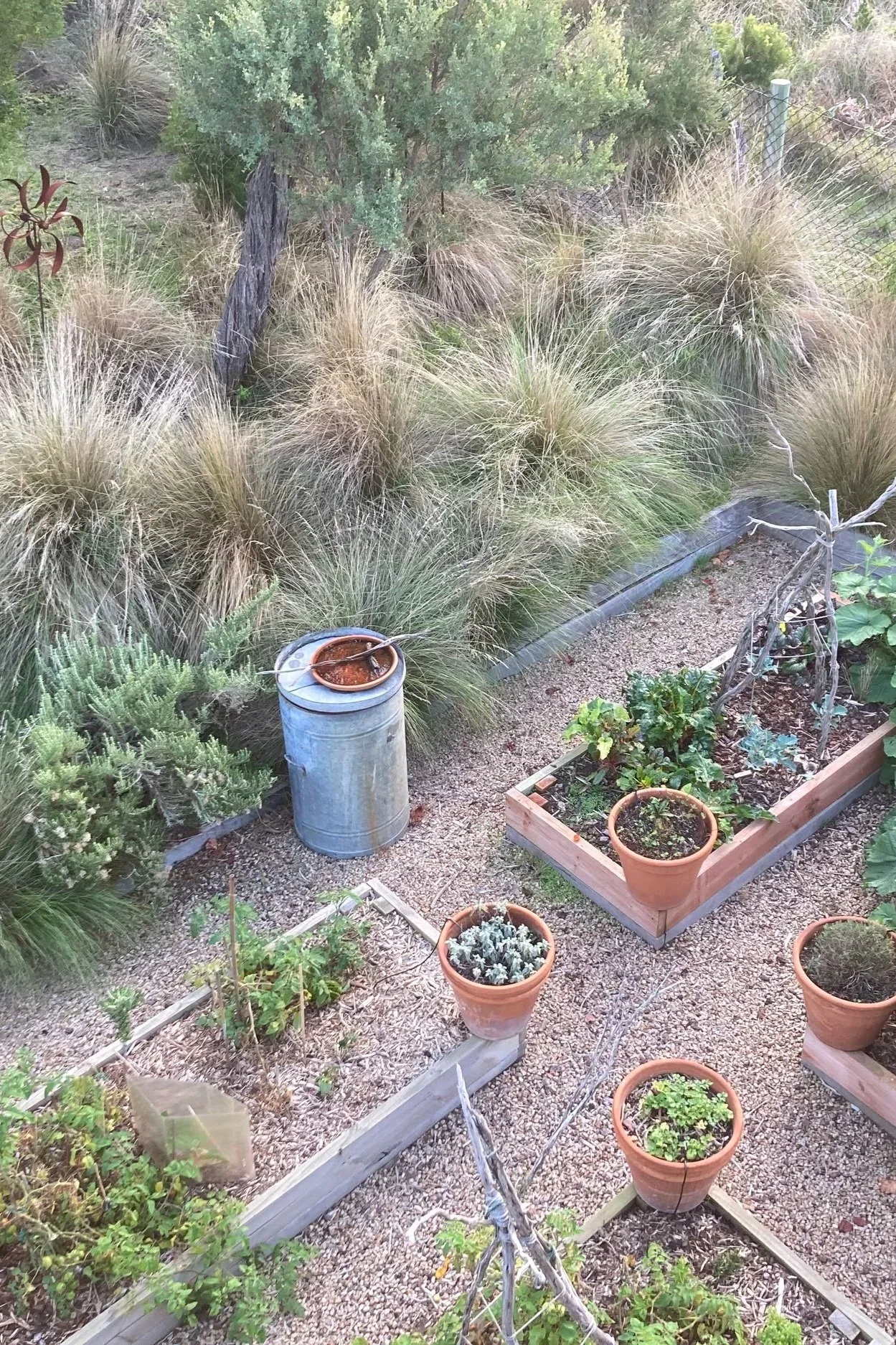
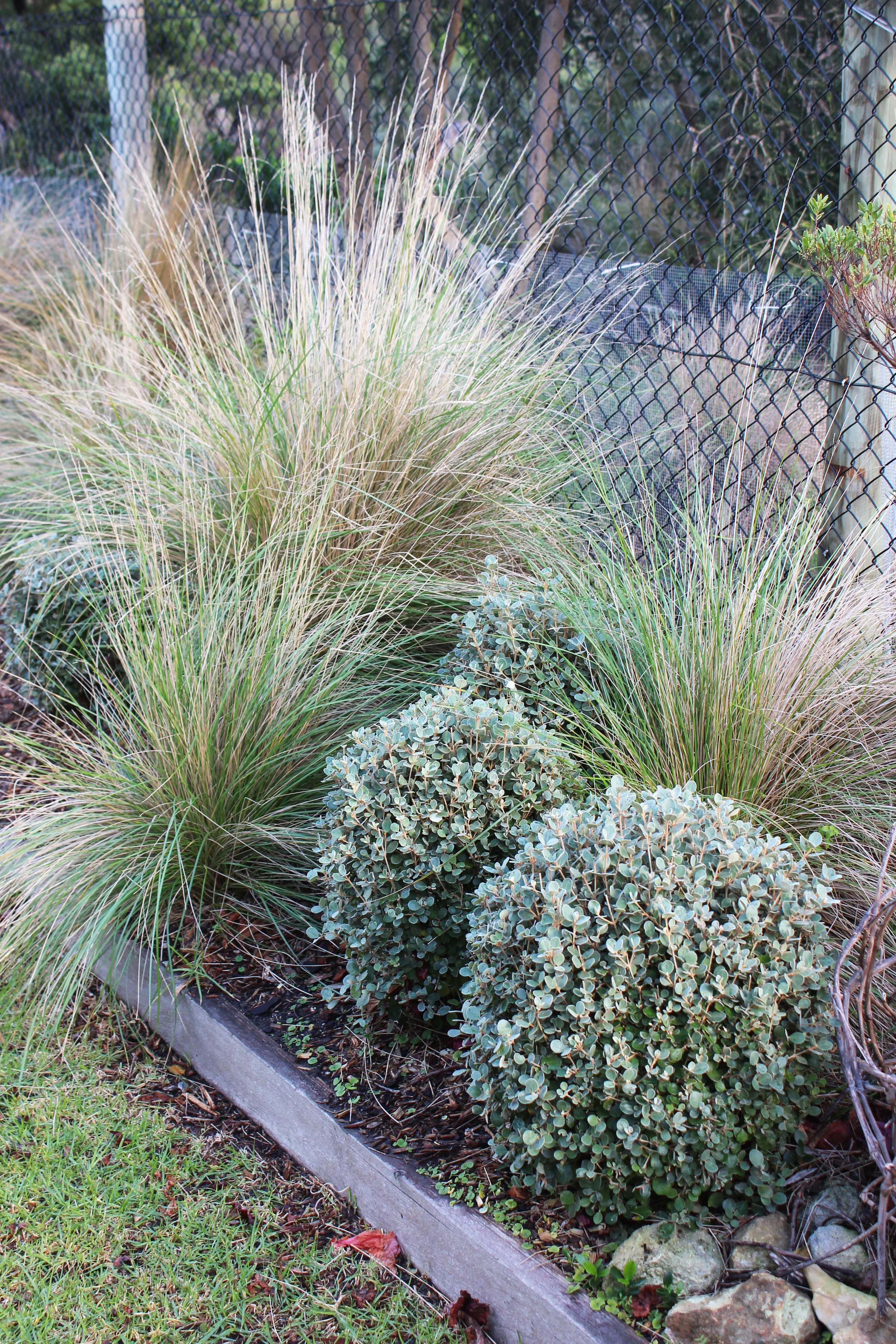
Poa labillardieri and Austrostipa flavescens beginning to form scattered drifts a garden in Blairgowrie
Imitation
Imitating the function and aesthetics of natural systems through garden design.
Imitating the function and aesthetics of natural systems through garden design. Observing the appearance of natural systems, in this case the Mornington Peninsula and Point Nepean National Parks, is only part of how ecological systems work. However, it can lead to a rudimentary and workable understanding important at the residential garden design scale.
This process begins by closely observing the character and composition of a natural system, then using careful species selection to recreate not just its appearance, but the ecological relationships that give rise to it. From there, the landscape is allowed to develop over time—revealing which species establish, how they interact and adapt—before being refined through ongoing observation, selective pruning, removing, weeding and re-planting as the garden matures year by year.
Reducing landscapes to visual properties may be crude and anachronistic; however, observing, waiting and recreating is not. Forming visually appealing landscapes and gardens that people want (that are ‘beautiful’) and further inspire them beyond ecological restoration is a missing link overlooked in current landscape architecture discourse. It is fashionable to demonise the past understanding of picturesque landscapes, prominent in 18th- and 19th-century Europe, without offering a convincing alternative. It is possible to blend visual beauty with ecological resilience in a residential garden context.
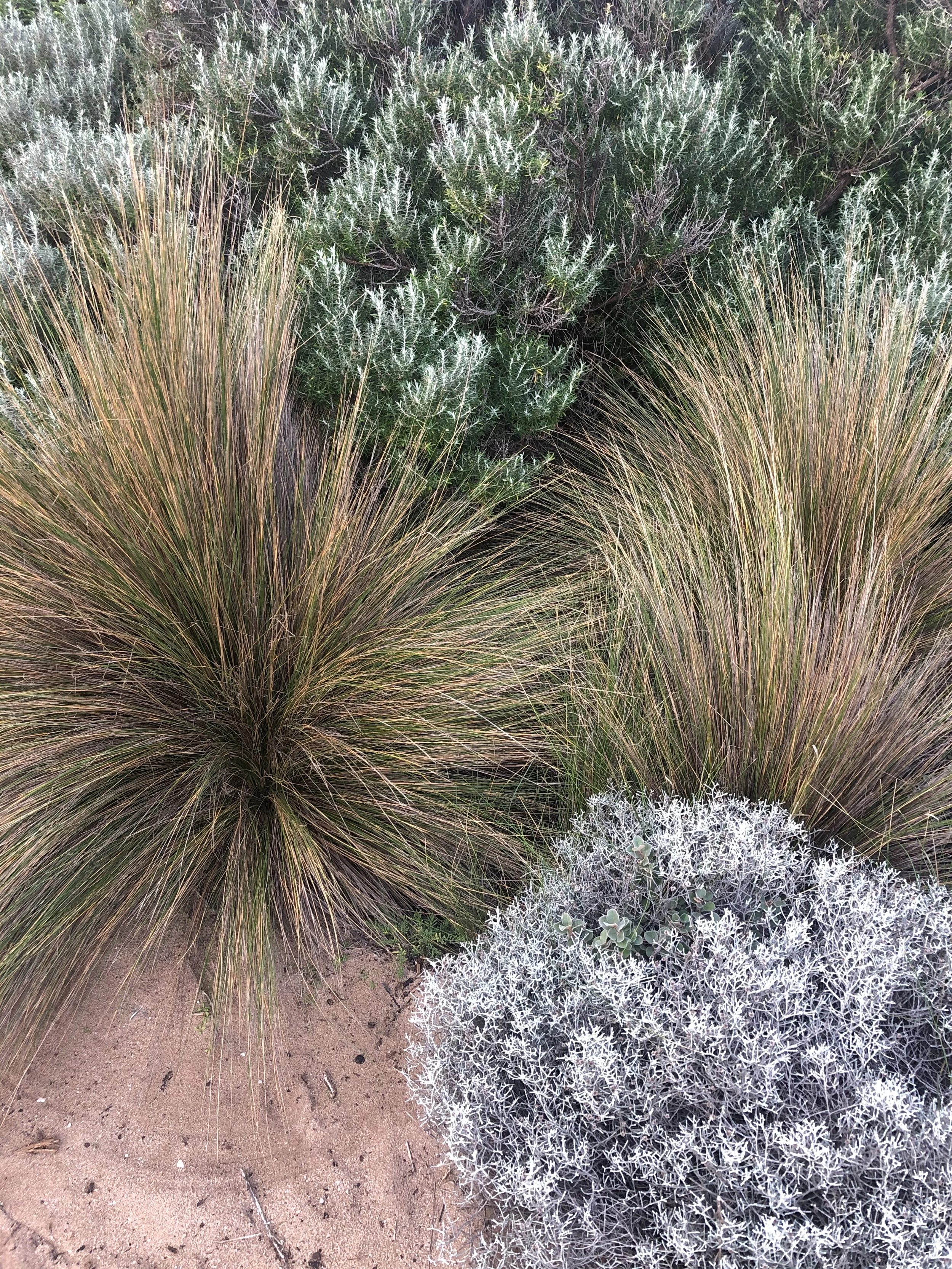
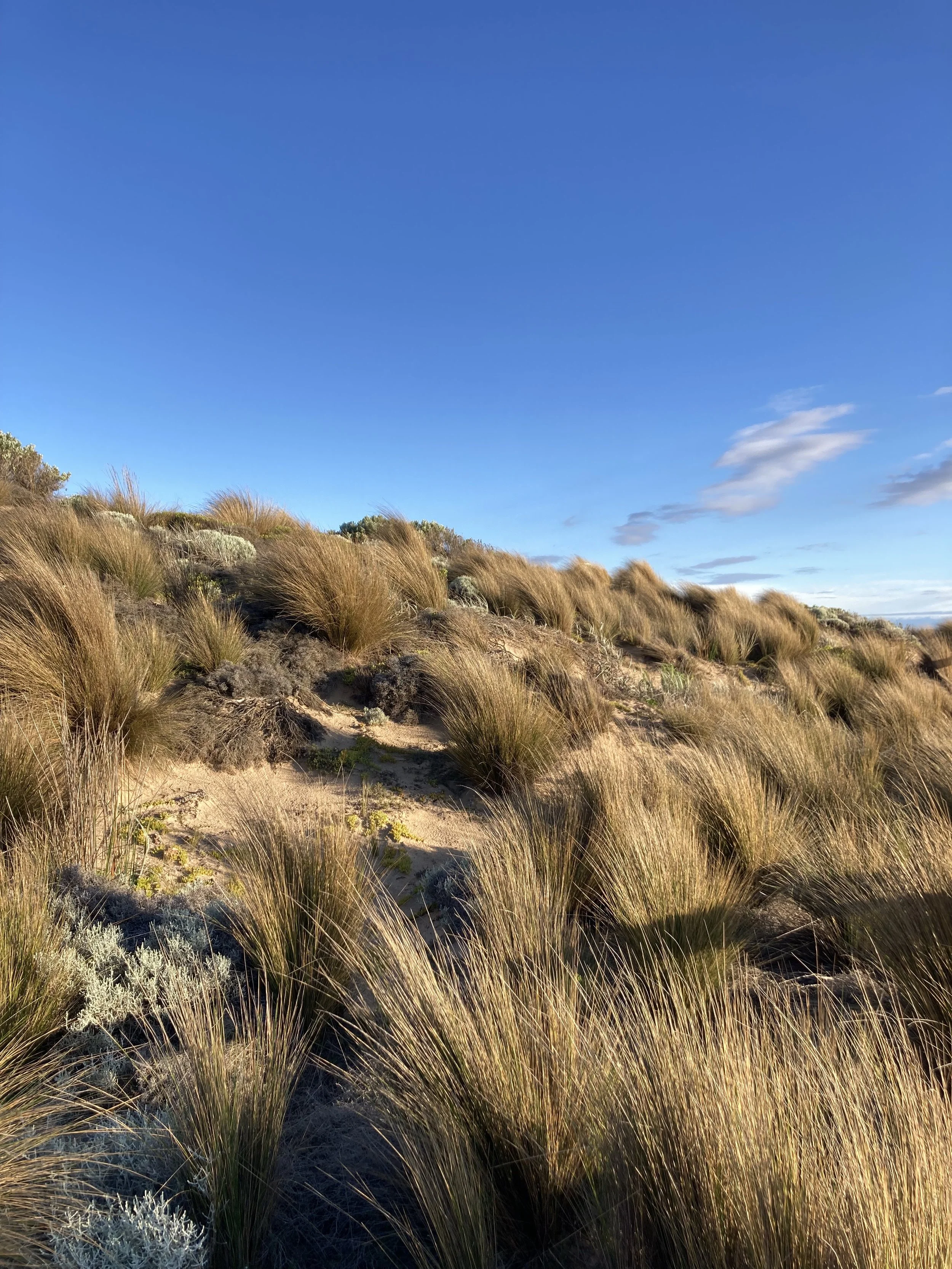
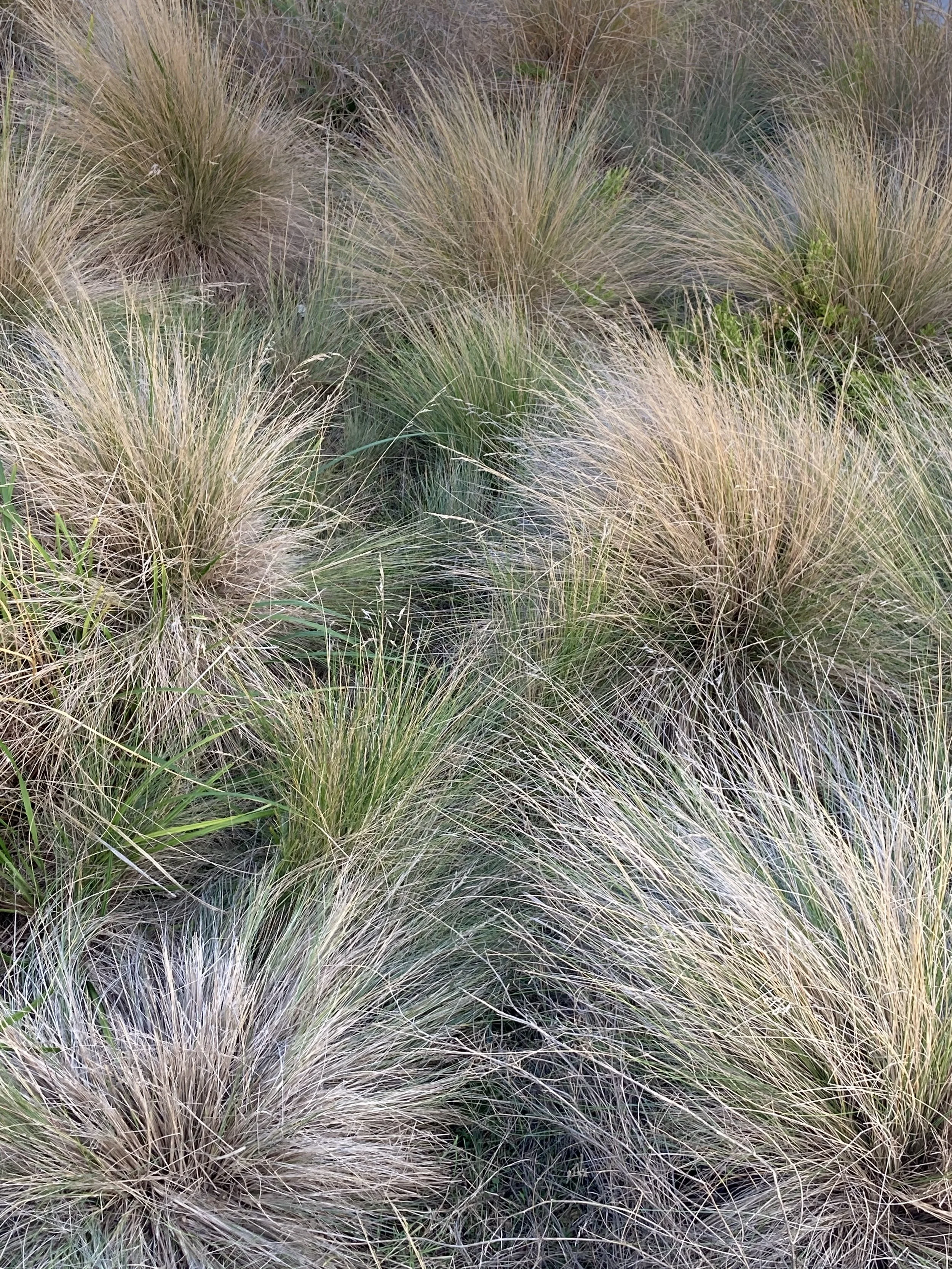
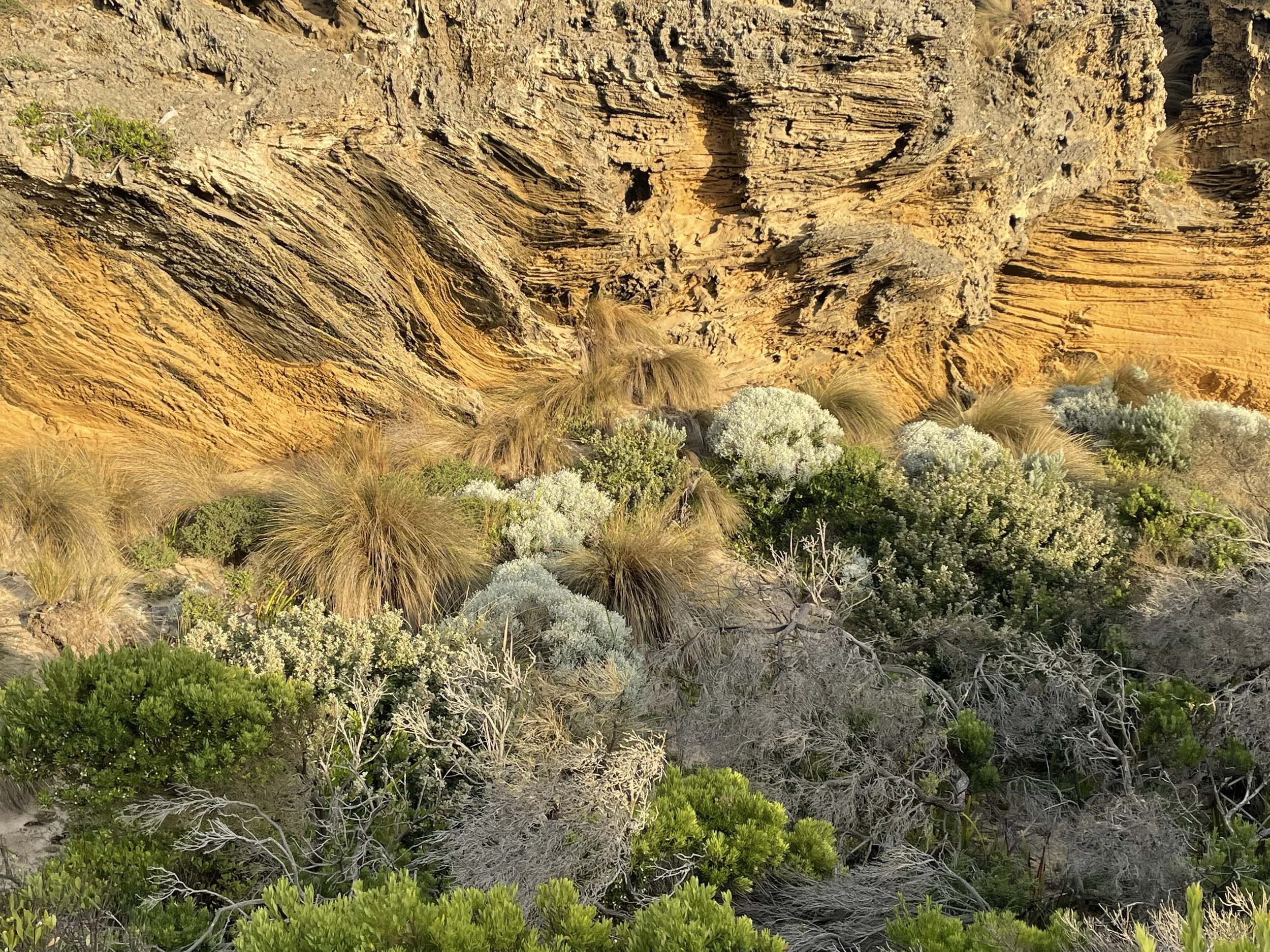
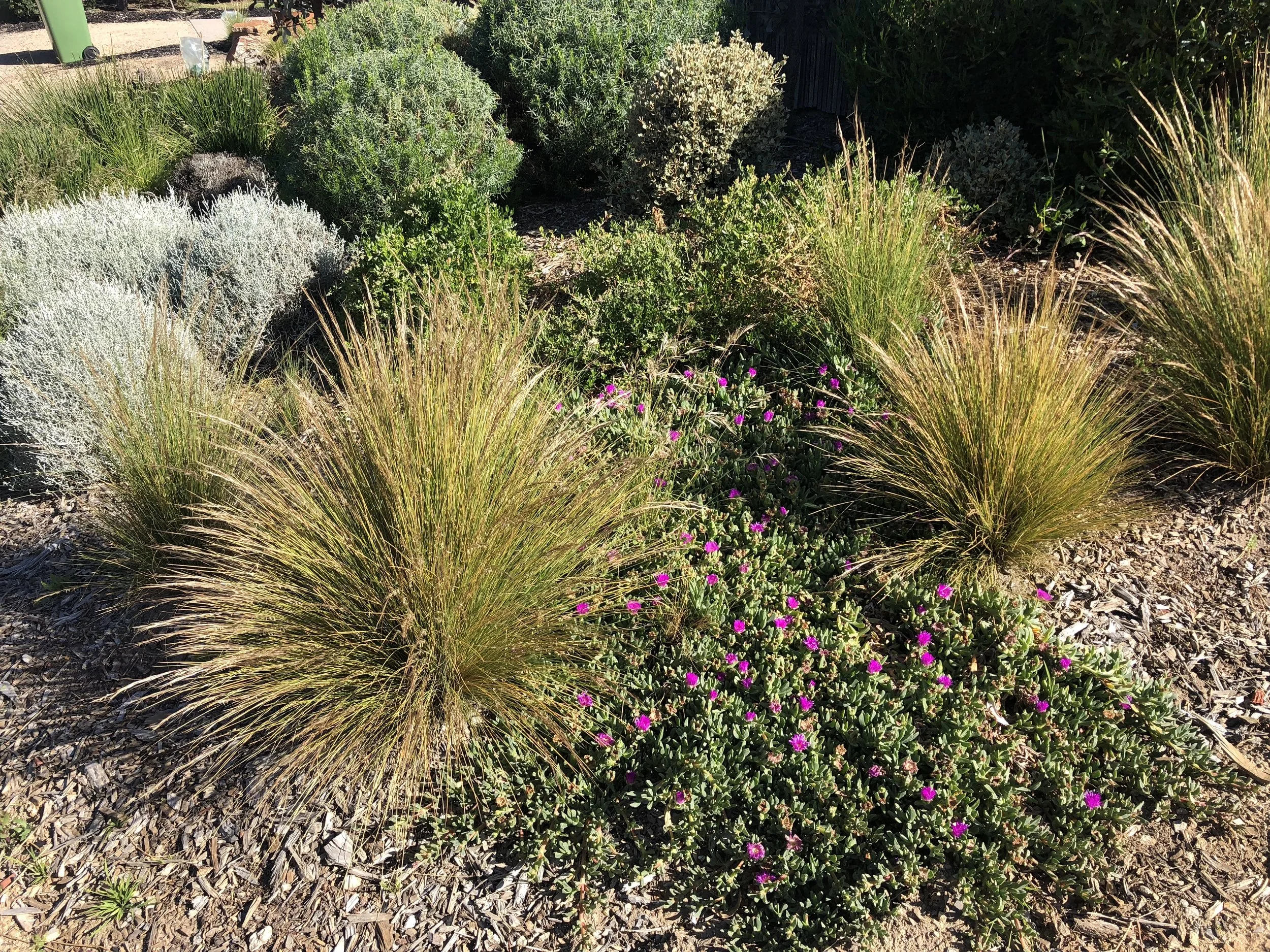
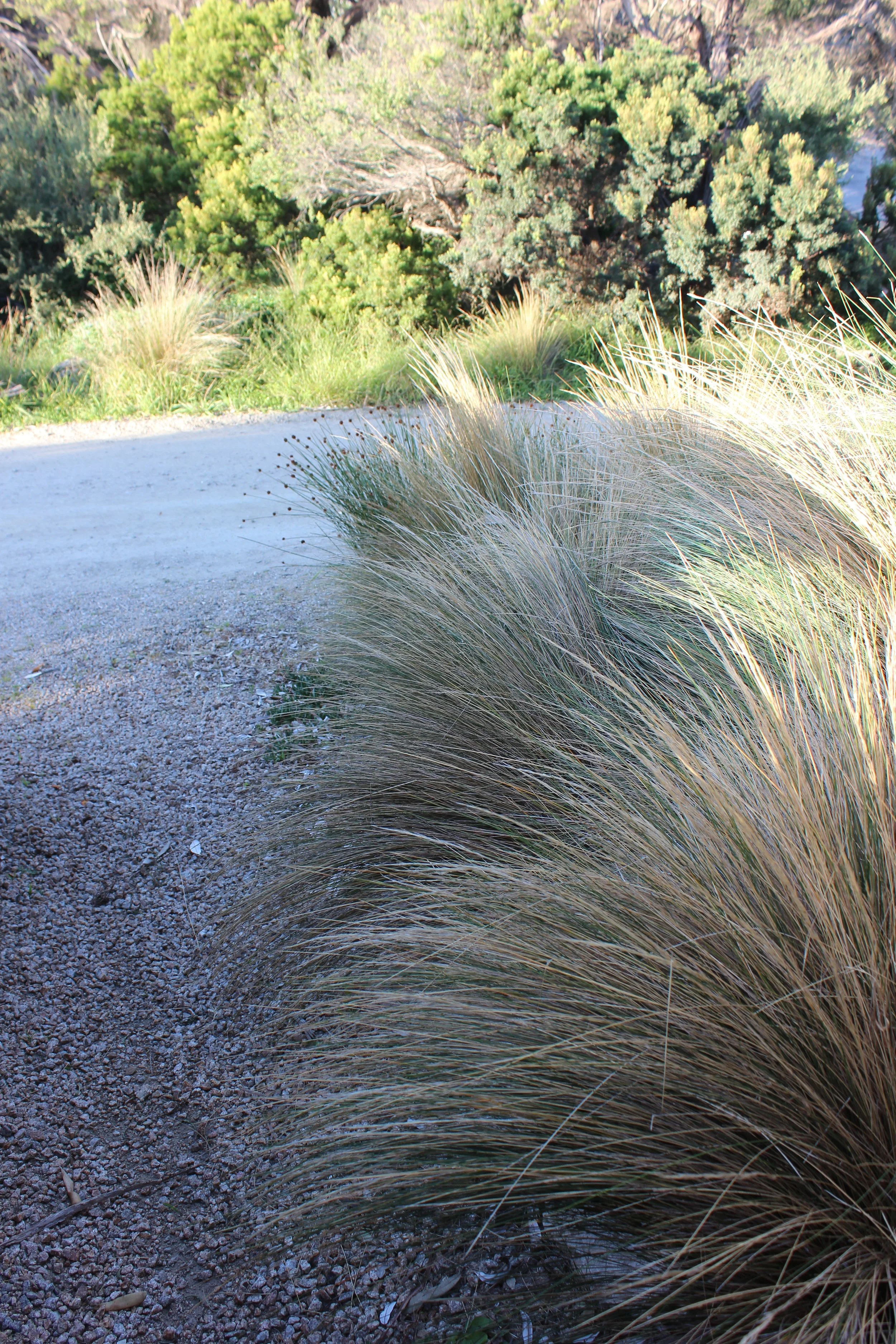
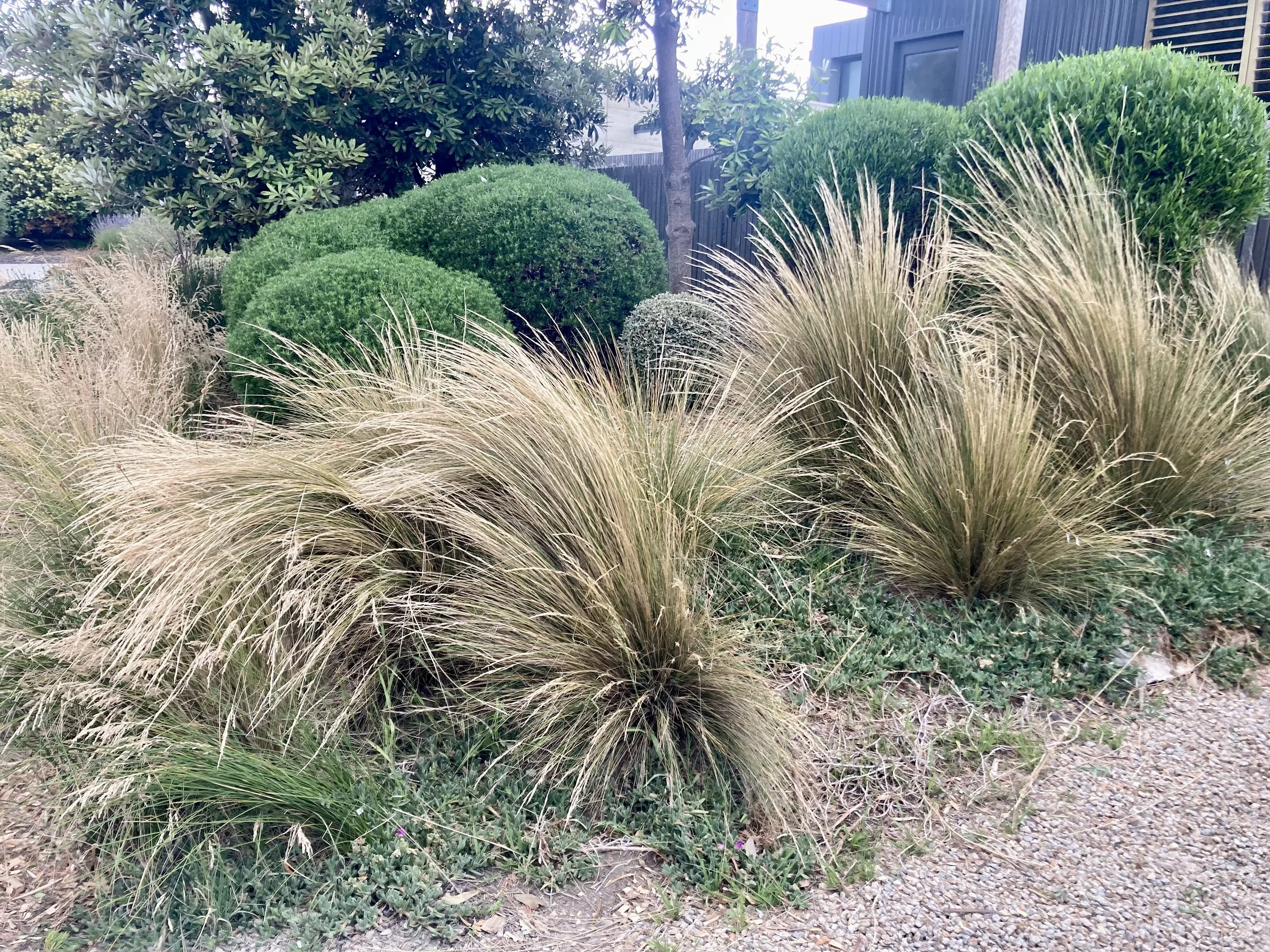
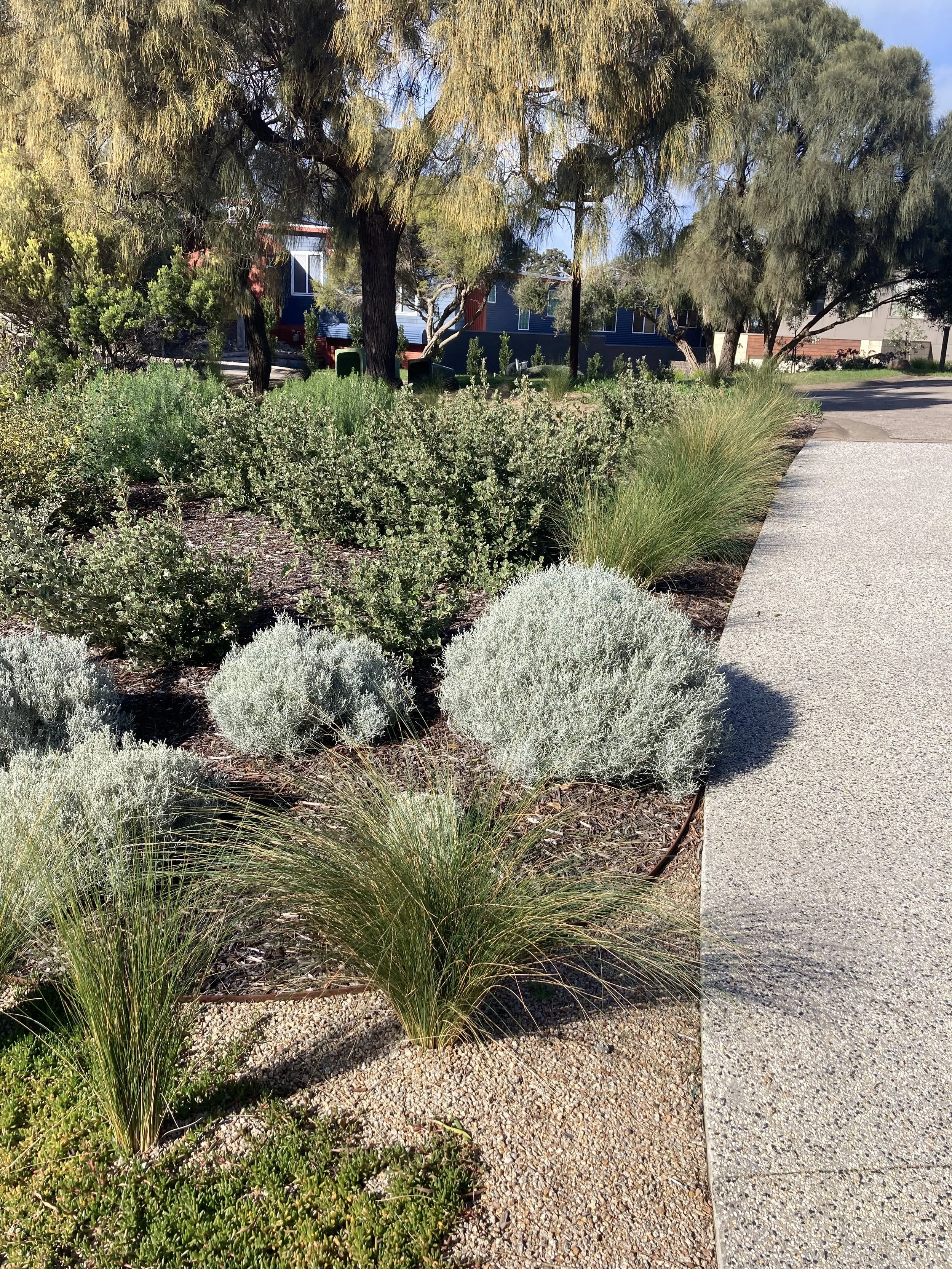
Imitation 01 - Coastal Tussock Grassland EVC 163
Observation
50% density of Austrostipa stipoides planted at 1 plant per m2
Exposed, windy and sunny location, this aids the establishment of Leucophyta brownii
Shallow rocky limestone soils help to suppress weed growth
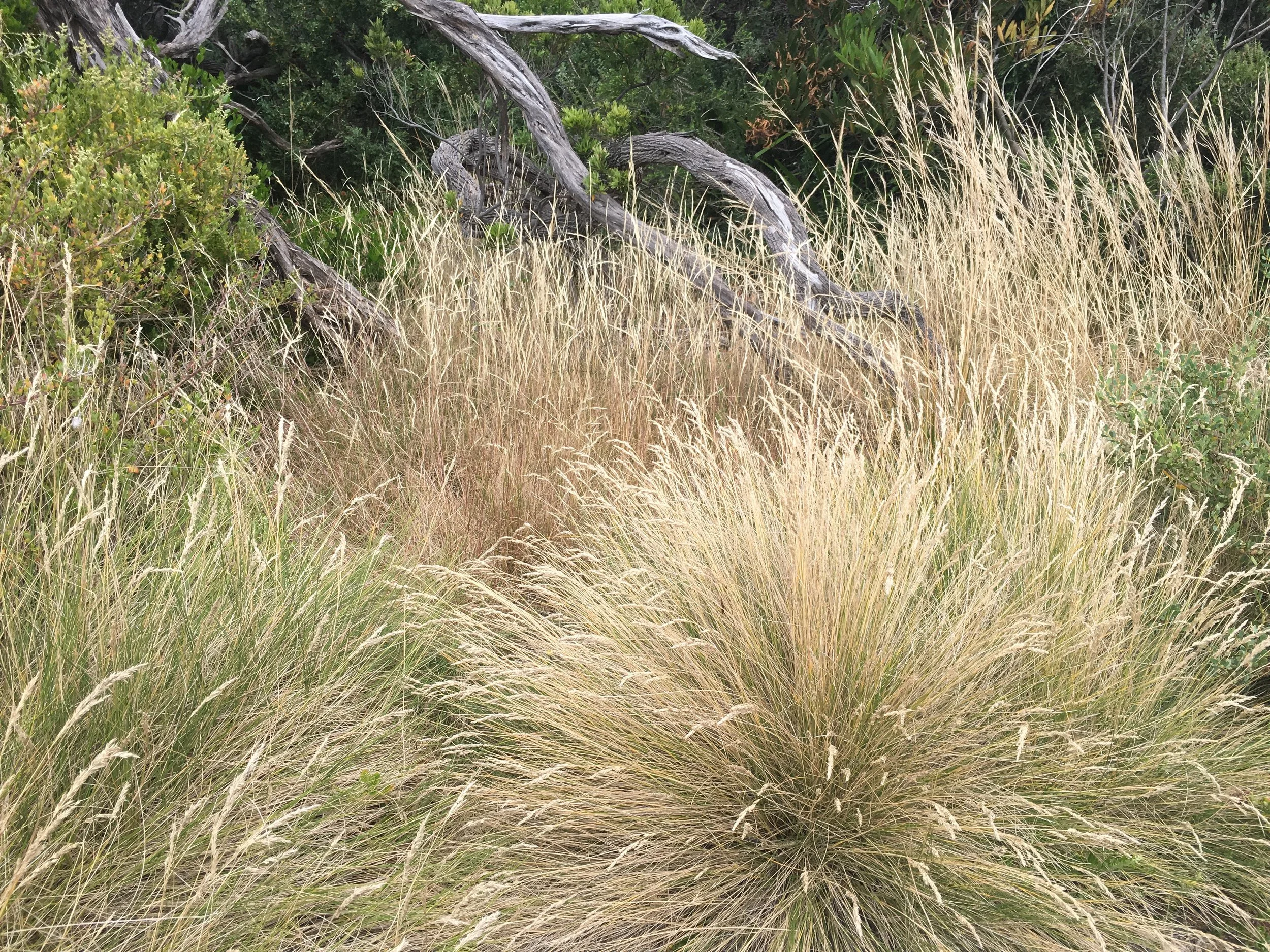
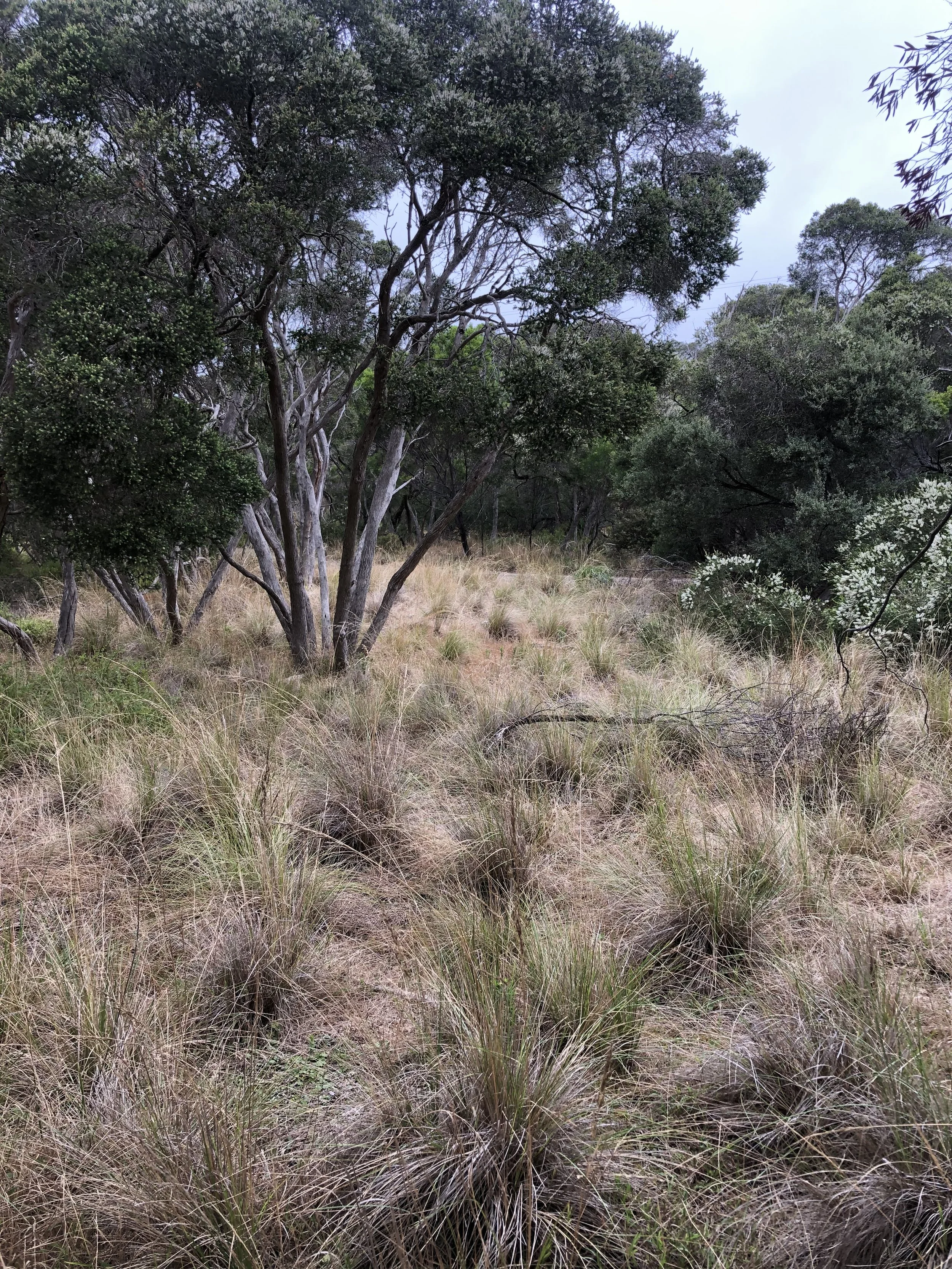
Imitation 02 - Coastal Tussock Grassland EVC 309
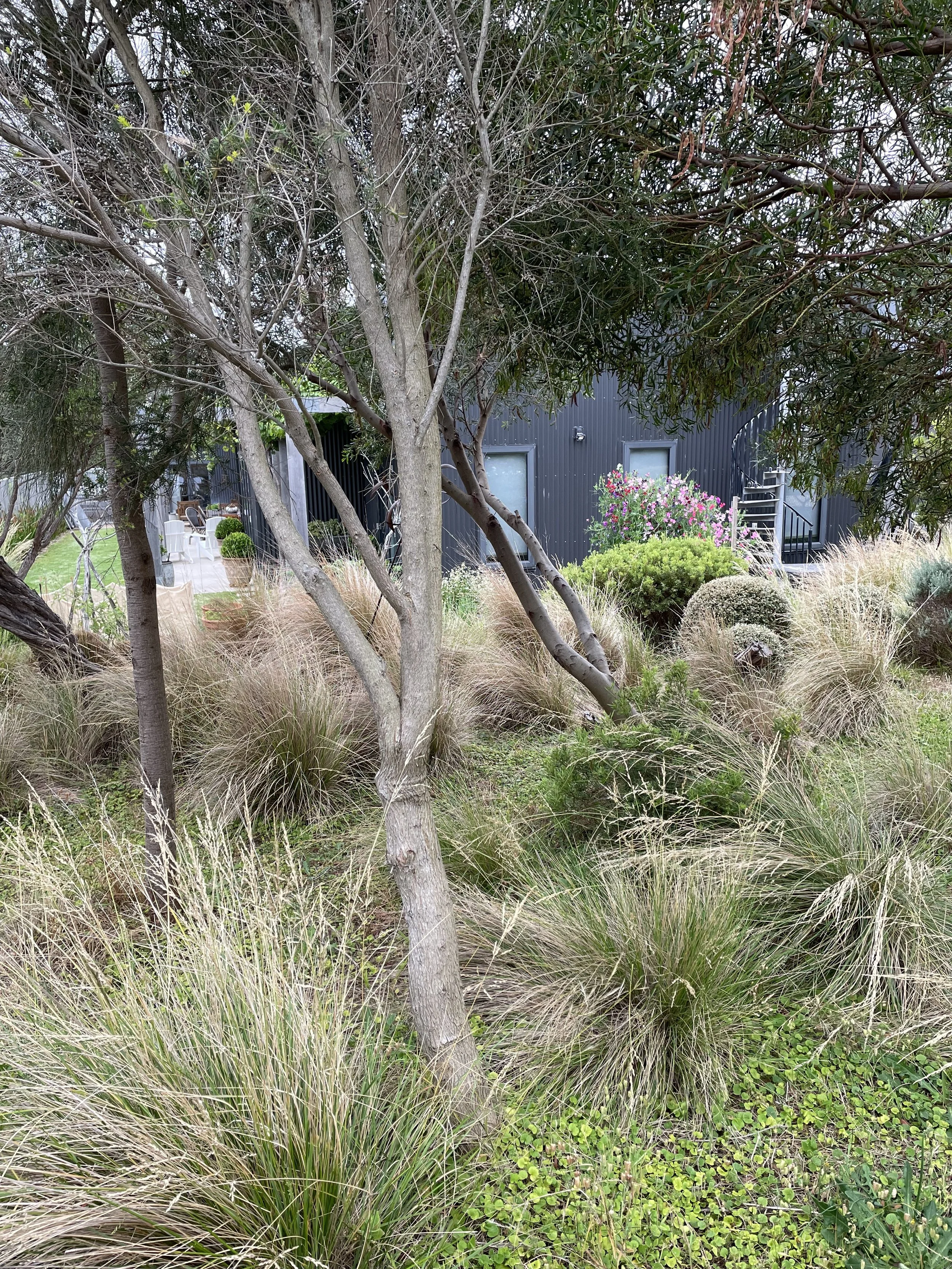
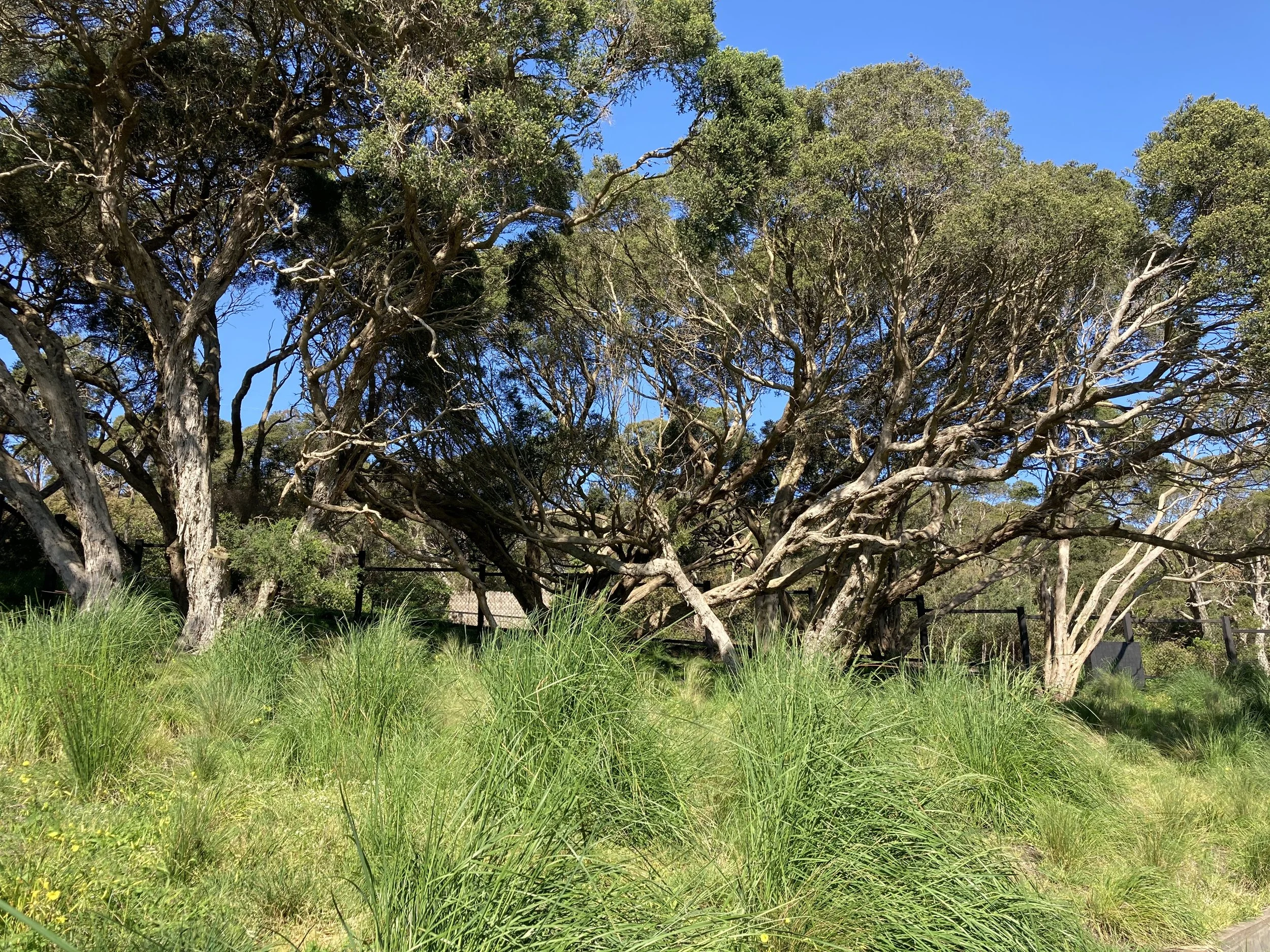
Observation
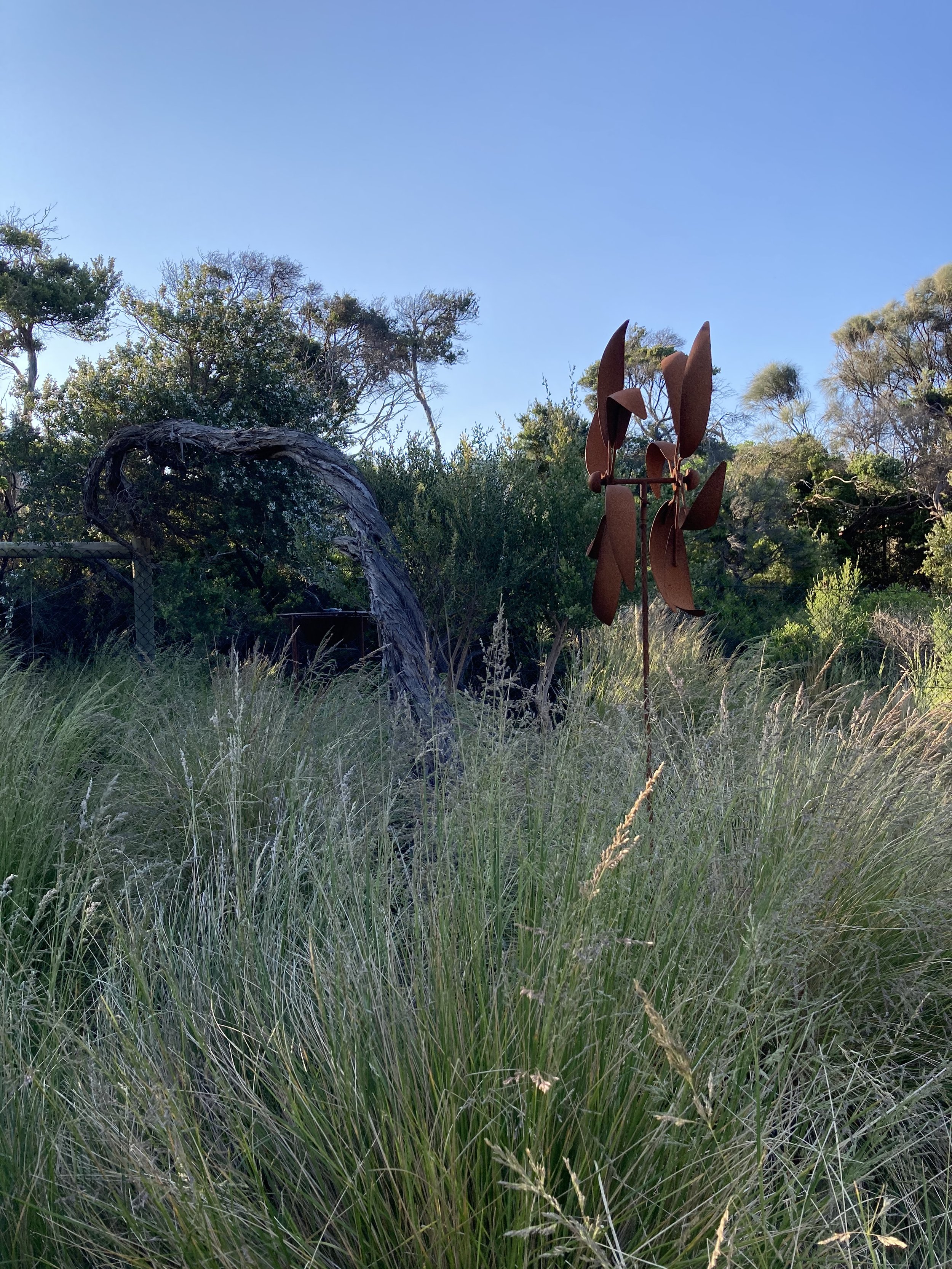
High planting density of Poa labillardierei helps suppress weeds and establishes fast
Full sun to part shade with groundcover of dichondra and moss
Clipping, brush cutting, or burning (outside of fire season in line with CFA regulations) grasses every 2 years to remove dead material
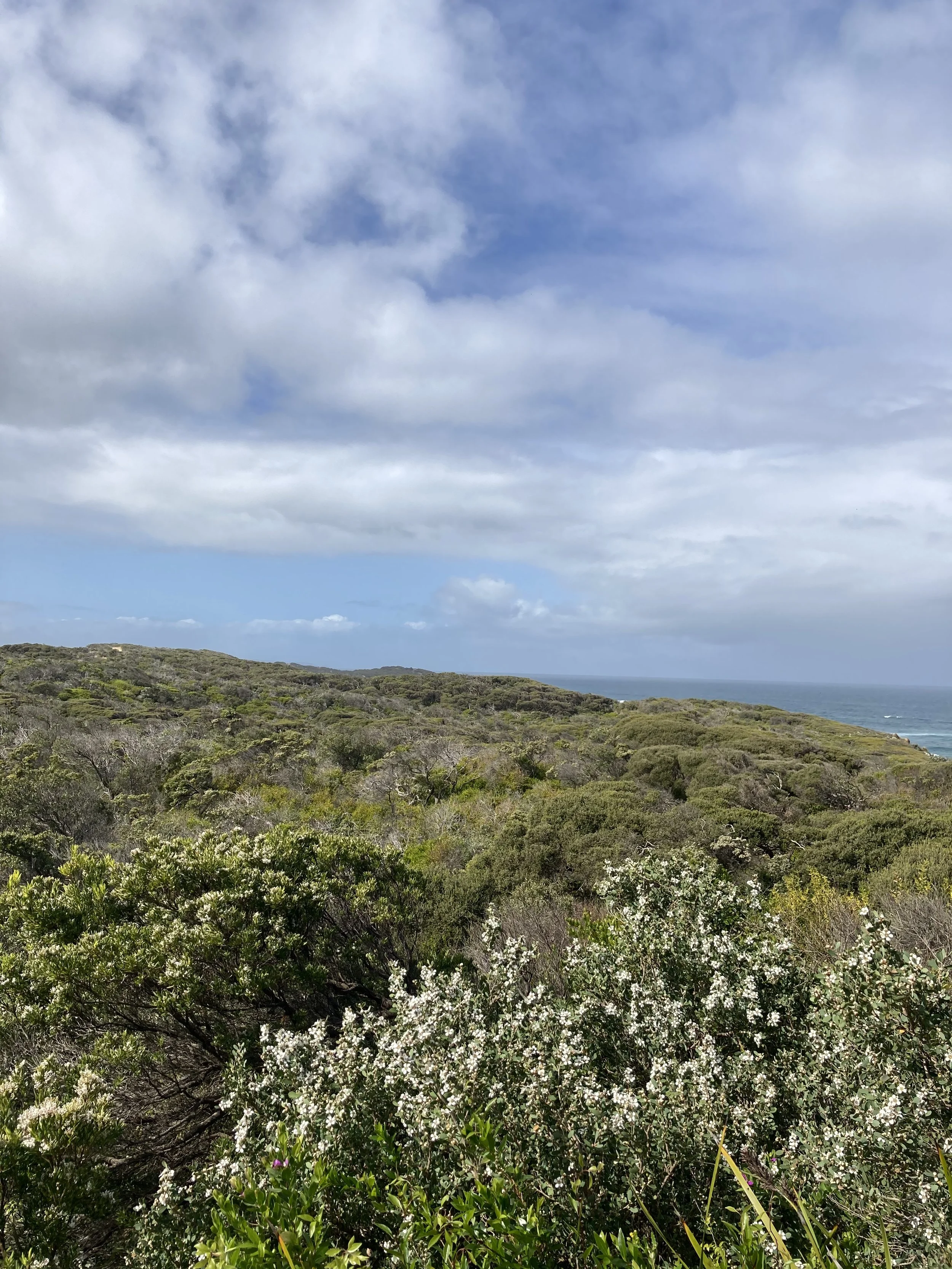
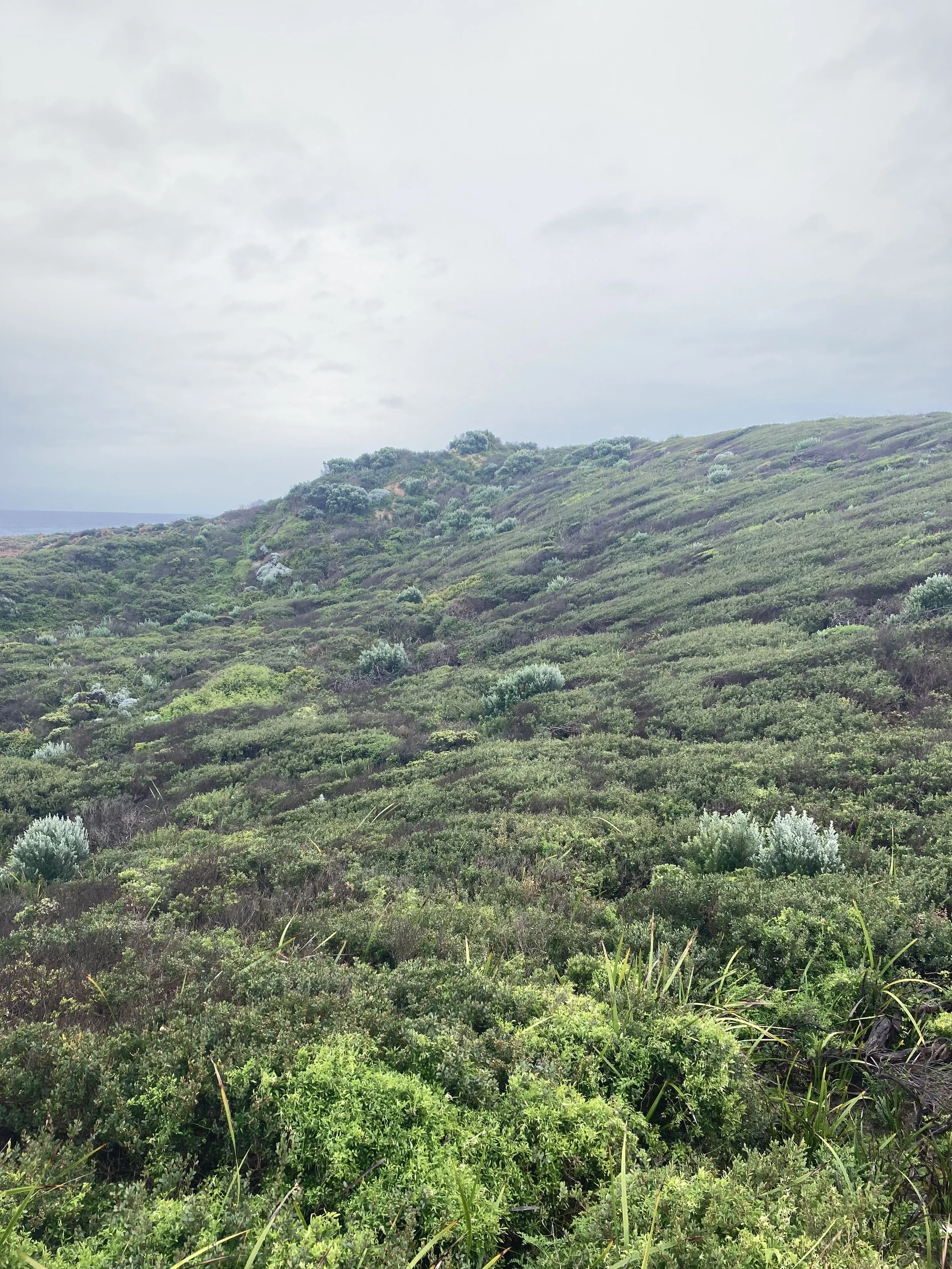
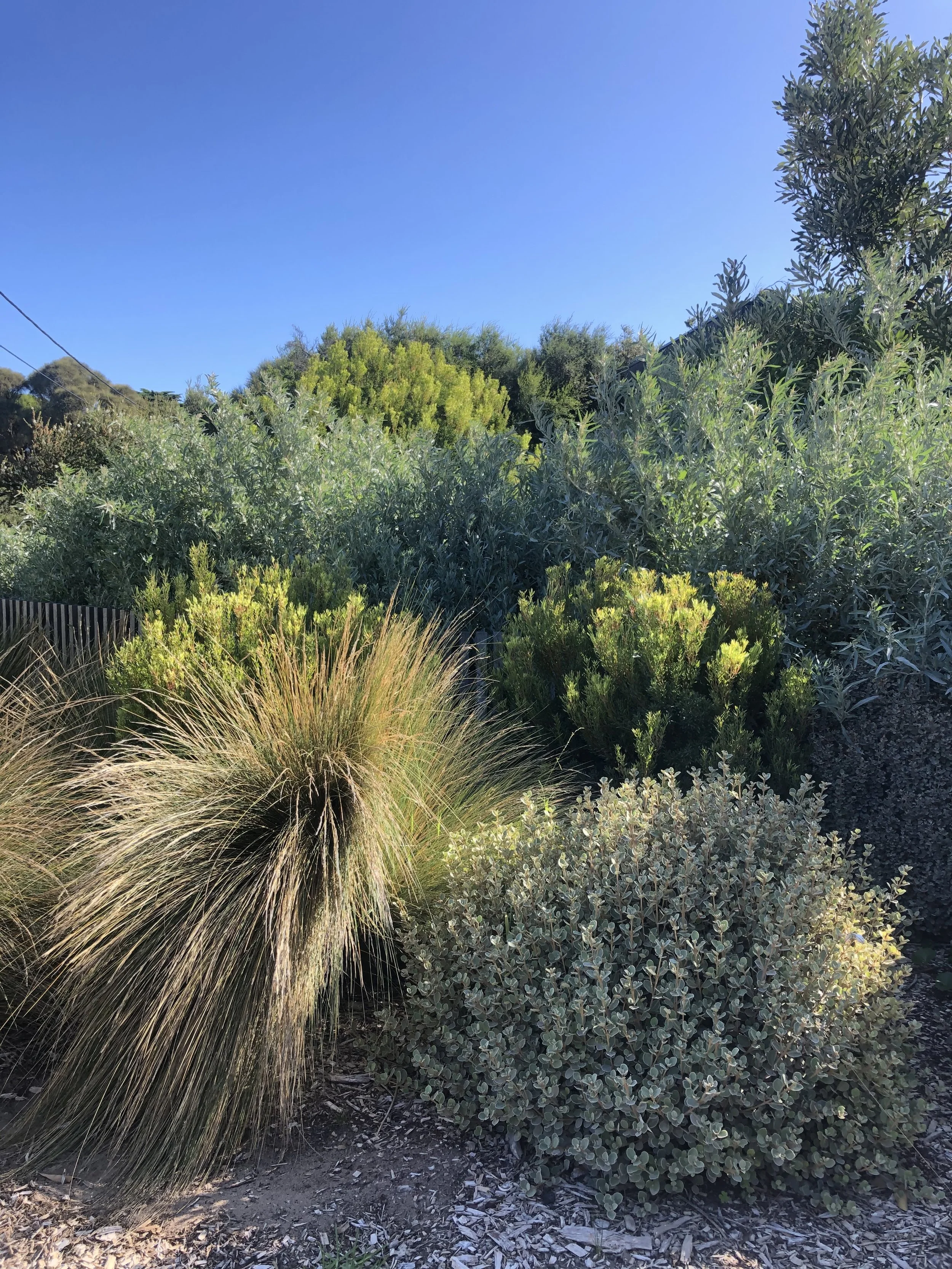
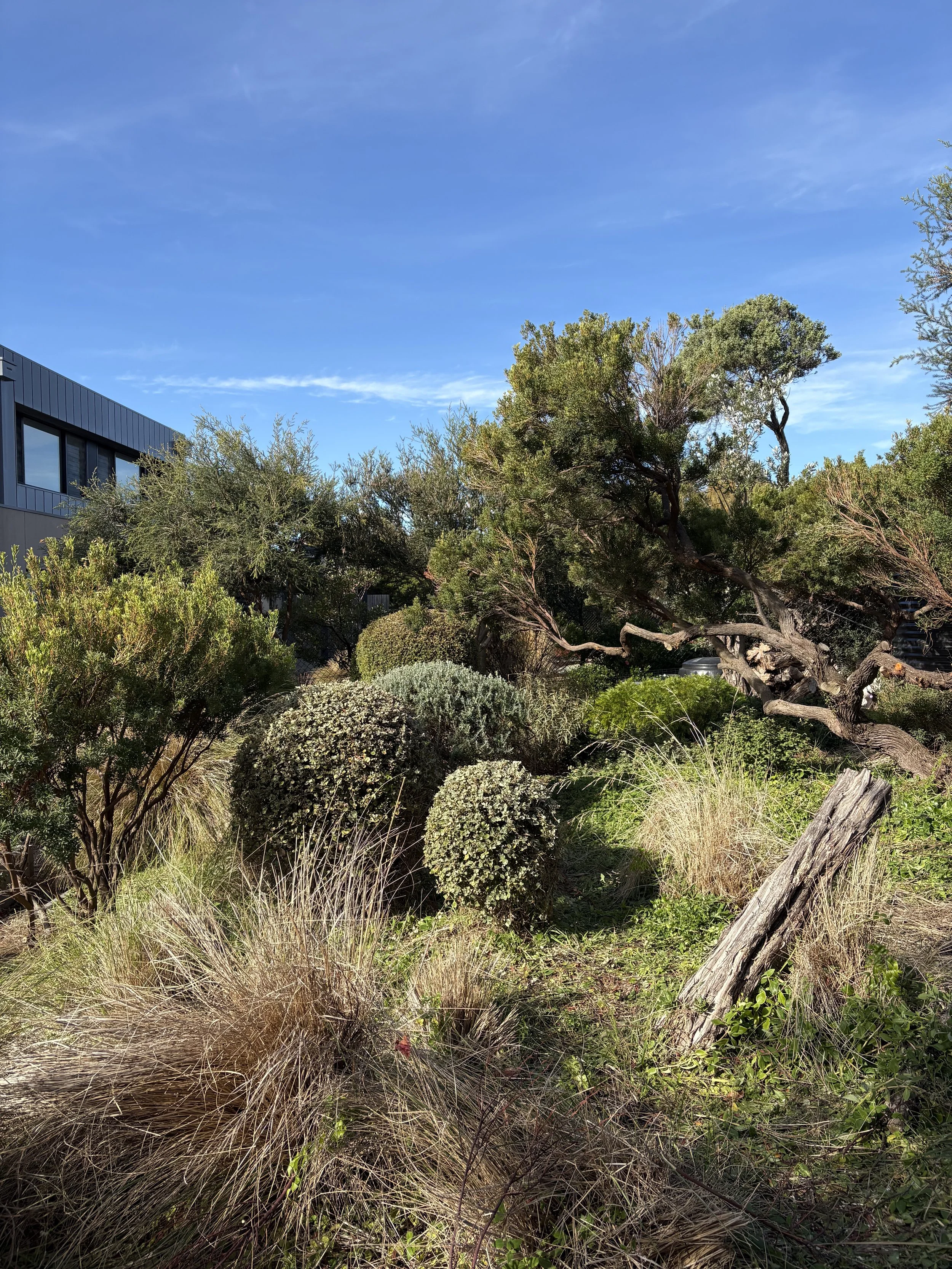
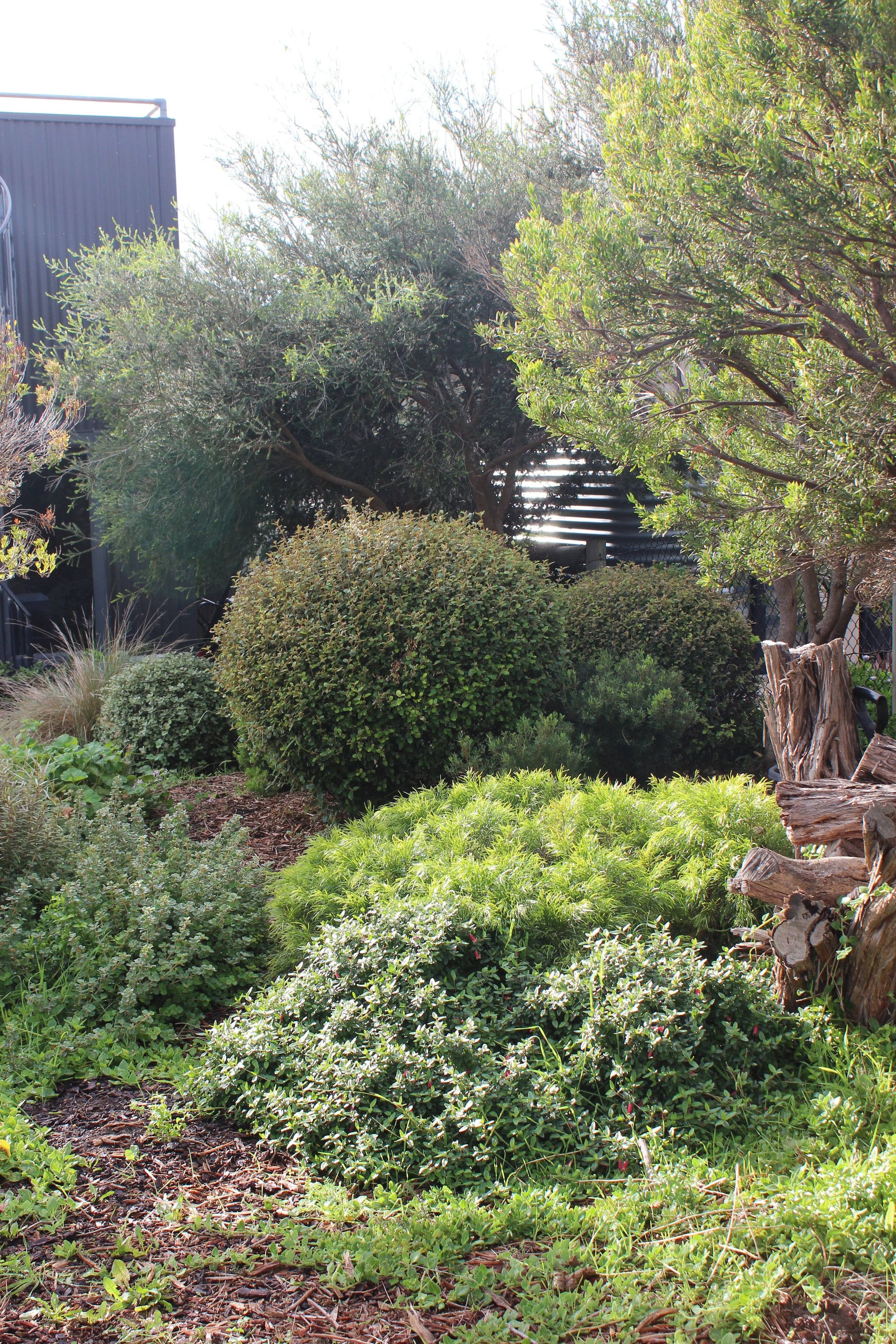
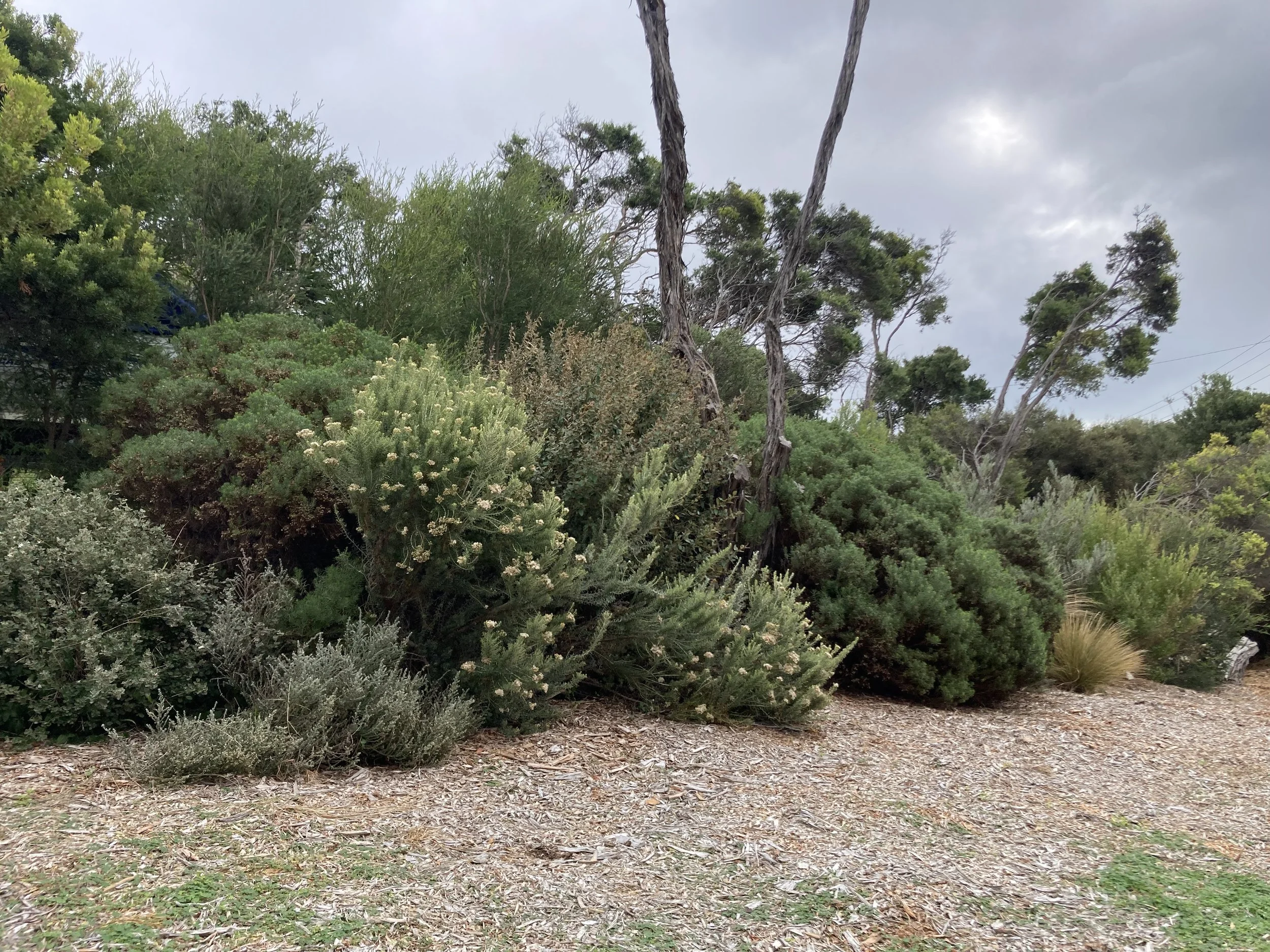
Imitation 03 - Coastal Alkaline Scrub EVC 858
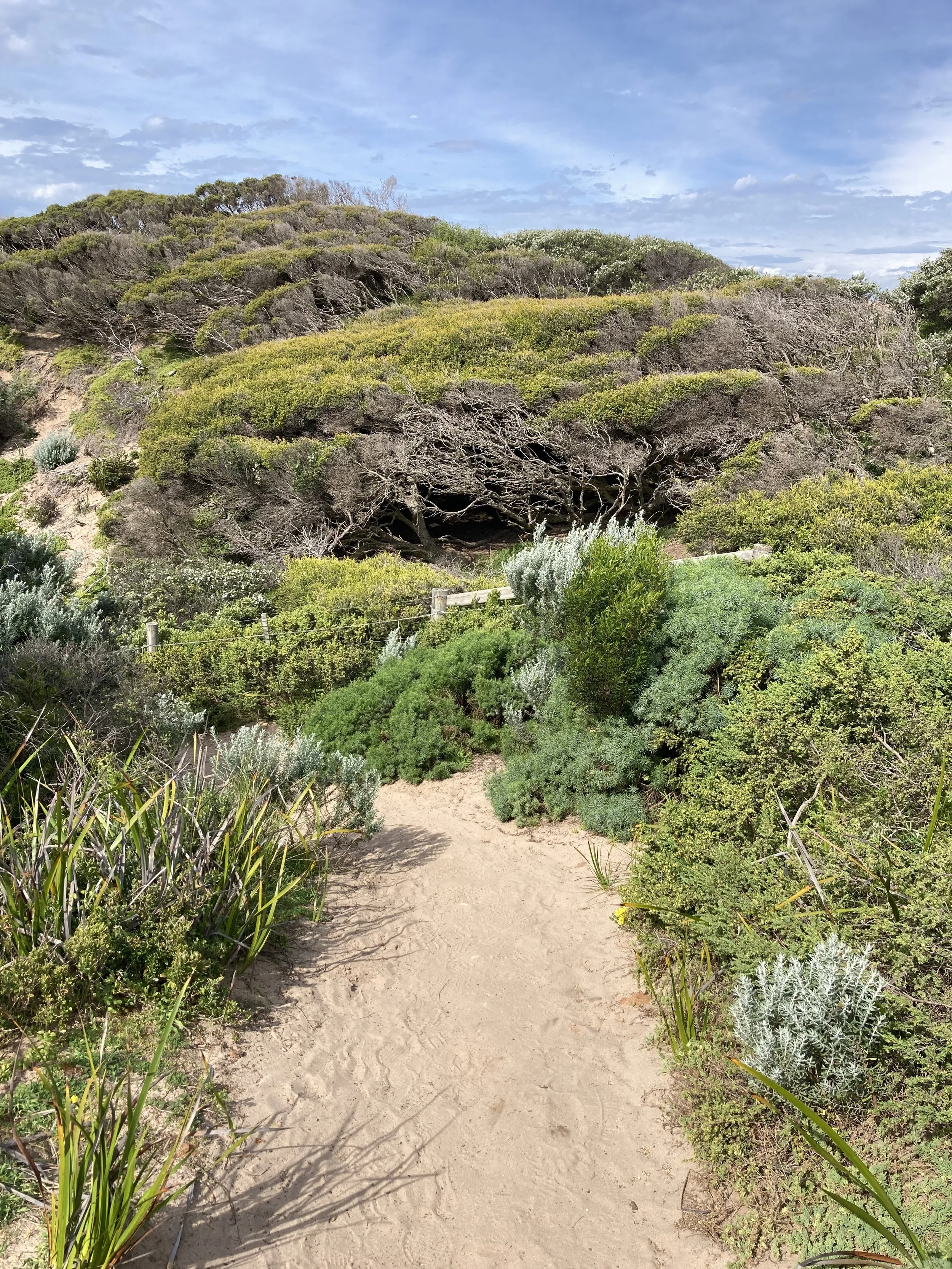
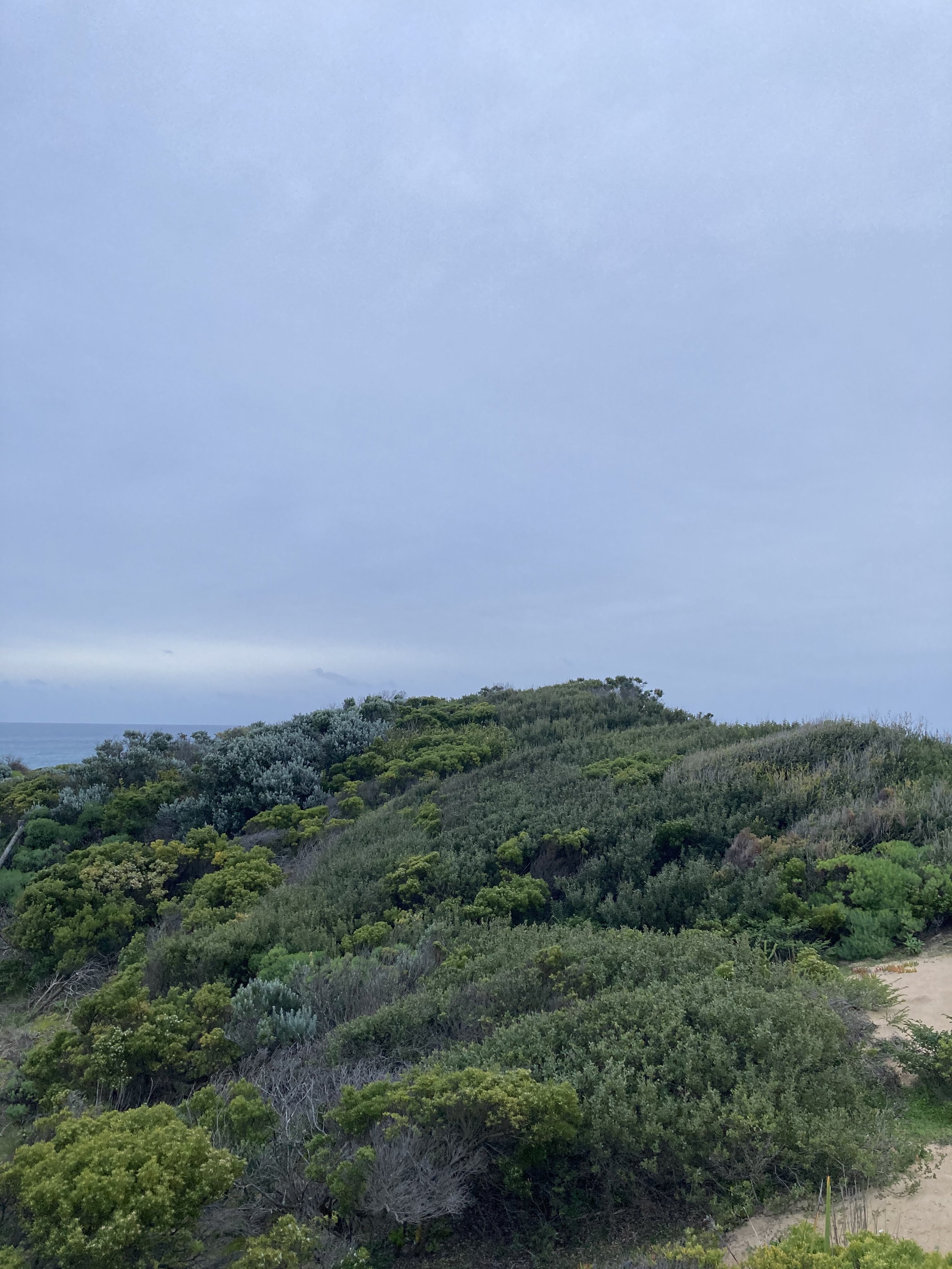
Observation
Spacing shrubs 2m apart stops overcrowding and allows plants to develop long-term
Tip pruning shrubs seasonally replicates pruning from salt winds and encourages new growth
Don’t prune during periods when plants are flowering
Tips and Techniques
Planting long-term foundation species of Moonah, Banksia or Sheoak in scattered clusters of 3 or 5 trees
Planting fast-growing pioneer species such as Coast Wirilda, Sweet Bursaria, Poa grasses and Native Pigface
Planting in groups of 1,3,5,7 for a more naturalistic aesthetic
Planting shrubs with a pattern of green-grey-green-grey foliage
For immediate impact, plant grasses amongst clusters of trees installed at a mature 2.5m height and 100L Pot size
Create space and contrast between ground plane and tree canopy by pruning tree trunk/leaders up to 1.5-2m above ground. This likely will take place over time as the tree grows.